
Sustainability in the Supply Chain
We wish to meet our legal, social, and environmental responsibilities not only within the Group, but also in our global supply chain.
Material impacts and risks and their interaction with strategy and business model
This chapter describes sustainability in the Volkswagen Group supply chain with a focus on the requirements of ESRS S2. The Volkswagen Group integrates topics related to both human rights and the environment into its management system related to the supply chain. The materiality assessment process included an evaluation of human rights and environmental aspects in the Volkswagen Group’s upstream and downstream supply chain. Since global supply chains are frequently highly complex and not always completely transparent, we have taken a precautionary approach in cases where information on potential impacts is lacking, making more restrictive assumptions and, in cases of doubt, assessing possible impacts to our own disadvantage. Further information is available in the “General Information” chapter under “Procedure for and results of the double materiality assessment”.
The materiality assessment shows that, particularly, the workers employed by direct and indirect suppliers in the upstream supply chain are or may be materially affected by positive and negative impacts. Our joint ventures are also regarded as suppliers insofar as they fulfill this role.
The evaluated supply chain consists of producers of components, machinery, tools and equipment, raw material suppliers, and service providers in the product development process, such as IT service providers, construction companies, caterers and cleaning service providers. Participants in the downstream process, such as recycling service providers, are also taken into account if they have a supply relationship with the Group. Temporary employment agencies and self-employed people are also included insofar as they are contracted via Group Procurement. Dealerships and customers are not taken into account here.
In the context of our Responsible Supply Chain System (ReSC-System) policy and the actions incorporated within it, the Volkswagen Group has developed an understanding of how workers with particular characteristics, those working in particular contexts, or those undertaking particular activities may be more severely affected by impacts. This also includes particularly vulnerable groups along the supply chain and comprises workers who may be exposed to an increased level of risk due to their form of employment, age, origin or other characteristics. In individual cases, this includes young workers and migrant workers, for example. These insights were factored into the materiality assessment and are also incorporated into the development of preventive, mitigating and remedial actions.
MATERIAL TOPICS
| Description | Impact/Risk/ Opportunity | Actual/Potential Impact | Value Chain | Time Horizon | ||||
|
Working Conditions |
|
|
|
|
||||
|
This impact stems from the safeguarding of workers’ well-being – particularly in the immediate business environment (such as at direct suppliers and their contractual partners) – for example by reducing the risk of accidents with occupational safety measures, providing access to healthcare services, providing training, and improving the economic independence of vulnerable groups. |
|
|
|
|
||||
|
This impact arises from the threat to workers’ well-being resulting, for example, from unsafe and unfair working conditions, inadequate occupational health and safety measures, unreasonably low wages, and excessive working hours. Inadequate wages, for example, adversely affect fundamental human rights, such as the right to food, good health, education and adequate living conditions. |
|
|
|
|
||||
|
|
|
|
||||||
|
Equal Treatment and Equal Opportunities for All |
|
|
|
|
||||
|
By guaranteeing equal treatment and equal opportunities for workers, for example, through the avoidance of all forms of discrimination, intimidation, harassment and unjustified disadvantage, this impact particularly affects workers in the immediate business environment, such as those at direct suppliers and their contractual partners. |
|
|
|
|
||||
|
This impact stems from the threat to equal treatment and equal opportunities for workers, for example due to insufficient action to prevent discrimination and violence or due to a large gender pay gap. |
|
|
|
|
||||
|
|
|
|
||||||
|
Other Work-Related Rights |
|
|
|
|
||||
|
This impact stems from ensuring that human rights for workers – particularly those in the immediate business environment (such as at direct suppliers and their contractual partners) – are upheld, for example by avoiding forced and child labor, and by complying with fundamental work-related rights. |
|
|
|
|
||||
|
This impact arises from a threat to workers’ human rights, particularly from forced and child labor. |
|
|
|
|
||||
|
|
|
|
||||||
|
The threat to workers’ human rights, particularly in relation to forced and child labor, gives rise to a financial risk, for example in relation to fines or compensation payments resulting from infringements or reporting procedures, restricted access to markets, vehicle recall campaigns and rework, reputational damage, and refinancing of the Group. |
|
|
|
|


|
|
Opportunity |
|
Positive |
|
Actual Impact |
|
Upstream |
|
Short-term |
|||||||||
|
|
Risk |
|
Negative |
|
Potential Impact |
|
Own Operation |
|
Medium-term |
|||||||||
|
|
Downstream |
|
Long-term |
|||||||||||||||


Interaction with the strategy and business model
The impacts identified in the materiality assessment have an effect on the Group’s supply chain, as does the financial risk. The topic of workers in the supply chain is taken into consideration at an overarching level in the Group’s sustainability strategy regenerate+. The focus here is on developing supply chains that are responsible and sustainable. A comprehensive strategy program has been launched in the Procurement department, the aims of which include strengthening sustainability and implementing regenerate+ on a broad scale.
With regard to the impacts and the risk in the areas of working conditions, equal treatment and equal opportunities, and other work-related rights, the Group employs a combination of preventive, mitigating, and remedial actions within its ReSC-System.
These actions can help to prevent violations of the Volkswagen Group’s sustainability requirements related to working conditions, equal treatment and equal opportunities, and other work-related rights. They reinforce the rights of the workers in the upstream and downstream supply chain and enable remedial action to be taken in the event of non-compliance.
Policy: Responsible supply chain system
Respecting human rights and protecting the environment along the supply chain are of paramount importance to the Volkswagen Group. We believe that sustainable economic activity is inextricably linked to ethical conduct and acting with integrity. With the Responsible Supply Chain System (ReSC-System), we have established a comprehensive management system aimed at identifying matters related to human rights and the environment in our supply chain at an early stage and addressing them with a systematic approach. It aims to counteract or eliminate negative impacts and risks, enhance positive impacts and potential opportunities, and continuously improve the sustainability performance of suppliers.
The Volkswagen Group’s ReSC-System is geared toward respecting and promoting globally valid regulations related to the protection of human rights. It rejects any form of child and forced labor, modern slavery, and human trafficking. Through its design, the system takes central international frameworks into account, including the Organization for Economic Co-operation and Development’s Guidelines for Multinational Enterprises (OECD Guidelines), the UN Guiding Principles on Business and Human Rights, the Core Labour Standards of the International Labour Organization (ILO) – including provisions on precarious work –, the UN Universal Declaration of Human Rights, the Ten Principles of the United Nations Global Compact, and the OECD Guidelines for Responsible Supply Chains of Minerals from Conflict-Affected and High-Risk Areas.
Combined with the Group’s internal targets, rules and policies, these standards form the foundations for the Volkswagen Group’s due diligence processes related to human rights and the environment. Within this context, the ReSC-System is designed to be a risk-based management approach, offering a structured basis for the implementation and enhancement of relevant actions. It is aligned with the requirements of the Lieferkettensorgfaltspflichtengesetz (LkSG – German Supply Chain Due Diligence Act) and similar legal frameworks, enabling proactive engagement with corporate due diligence requirements. The system’s appropriateness and effectiveness and its conformity with relevant frameworks are reviewed regularly and, if necessary, further developed. Due to the diversity of its products, the Volkswagen Group’s supply chain is extremely complex, spread widely across the globe and subject to constant change. It includes more than 63,000 supplier sites in 93 countries around the world. The ReSC-System applies on a Group-wide basis to all direct suppliers in the upstream and downstream supply chain and accompanies the entire procurement process. Furthermore, it also encompasses indirect suppliers depending on the situation and the risk. It follows a risk-based management approach and is applied even before a contractual relationship has been established, i.e. before delivery times and purchase prices have been negotiated. Its central logic is based on regular risk analyses at supplier level.
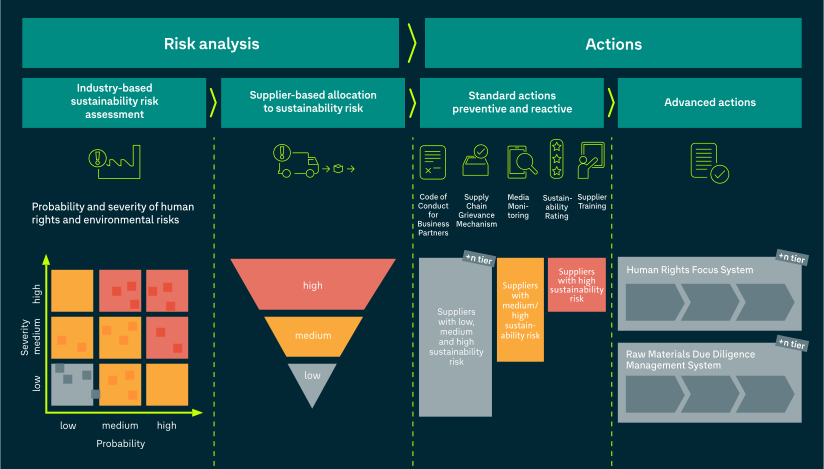
The risk analysis is the first step in the ReSC-System. It is based on the respective supplier’s business model and also incorporates internal and external data sources on risks related to human rights and the environment. Suppliers are allocated to risk categories (low, medium, high) on the basis of this analysis. The assigned sustainability risk is used as a guide to assess the degree to which identified negative impacts may occur at the relevant supplier. If a supplier is awarded a low sustainability risk level, an additional country risk score is taken into account in order to integrate regional risk factors into the analysis. If the supplier’s production site has an increased country risk, it is upgraded to the medium risk category. Based on the risk classification, the supplier is assigned a package of measures to prevent and mitigate the impacts identified. Suppliers with a high risk rating are undergoing, for example, the sustainability rating (S-Rating) process. The risk analysis is updated regularly and appropriate actions are developed within the scope of the ReSC-System. These actions include both standard measures, such as the confirmation of the Code of Conduct for Business Partners, the Supply Chain Grievance Mechanism (SCGM), media monitoring, the S-Rating, and supplier training, as well as more advanced measures, including the Human Rights Focus System (HRFS) and the Raw Material Due Diligence Management System (RMDDMS).
The specific actions are described in the section “Actions under the Responsible Supply Chain System”.
Responsibility for the ReSC-System is embedded across several levels of the Volkswagen Group. The member of the Volkswagen AG Board of Management responsible for the Core brand group and, as such, with overarching responsibility for Group Procurement holds overall strategic responsibility for the system. Volkswagen AG’s Group Procurement Sustainability department is responsible for managing sustainability aspects in the supply chain at an operational level.
The ReSC-System is implemented in close liaison with the Group-wide Sustainability Procurement Network and with the Group Compliance and Group Legal divisions. More than 130 experts from around the world are involved in this network. The ReSC-System is regularly reviewed and recommended areas of action are developed as required.
Implementation of the policy is governed in binding, Group-wide regulations. The system is enshrined in a Group policy that applies to all controlled companies within the Volkswagen Group. Its adoption into local directives is reviewed every year on the basis of spot checks.
The structures and processes needed for implementation are documented in Group-wide guidelines and process documents, which are available to the responsible functions within the Group. Relevant information – including the Code of Conduct for Business Partners – is also made available to the public.
Actions under the responsible supply chain system
The Volkswagen Group applies a systematic approach when dealing with the negative impacts identified during the materiality assessment for the areas of working conditions, equal treatment and equal opportunities, and other work-related rights in the supply chain. This approach is an integral component of the ReSC-System and consists of preventive and reactive elements.
The described actions aim to identify and eliminate potential violations of the Code of Conduct for Business Partners such as work-related rights in the supply chain, and to improve suppliers’ sustainability performance on an ongoing basis. Beyond this, they also facilitate an appropriate response to actual and potential negative impacts. In the area of other work-related rights, an additional material financial risk has been identified and is also managed with the actions. At the same time, positive impacts related to working conditions, equal treatment and equal opportunities, and other work-related rights in the supply chain are to be specifically promoted. One actual positive impact arises in the immediate business environment in particular, i.e. for direct suppliers and their contractual partners. This impact is linked to aspects including the Code of Conduct for Business Partners, the self-assessment questionnaire (SAQ) and completed audits. A positive effect is also generated in the area of working conditions, particularly as a result of rubber processing initiatives in Indonesia. In relation to equal treatment and equal opportunities, positive effects are generated primarily by training and awareness-raising measures. Other work-related rights are also reinforced through our membership in the Responsible Mica Initiative.
The approaches within this context address the sustainability matters specified in ESRS 1 that were identified as material in the materiality assessment:
- Working conditions: working time, adequate wages, social dialogue, freedom of association, including the existence of works councils, collective bargaining and occupational health and safety.
- Equal treatment and equal opportunities: gender equality, equal pay for work of equal value, employment and inclusion of persons with disabilities, action against violence and harassment, and diversity.
- Other work-related rights: child labor, forced labor, adequate housing, and access to water and sanitation.
In the reporting year 2025, both standard and advanced actions were implemented in an effort to minimize material potential and actual negative impacts on workers in the supply chain. These actions address risks related to human rights and the environment. No separation between the two is made here as the underlying processes take an integrated approach.
The actions are further developed on an ongoing basis and their effectiveness is reviewed. An in-depth description of the individual actions is provided in the sections below.
Standard actions as the foundation of the Responsible Supply Chain System
Confirmation of the Code of Conduct for Business Partners
Before submitting a quote, direct suppliers must, in general, confirm that they acknowledge the validity of the requirements in the Code of Conduct for Business Partners. They must reconfirm their acknowledgment after twelve months if they wish to submit new quotes. The Code of Conduct for Business Partners is also a component of the agreements under which contracts are awarded.
In order to extend the requirements of the Code of Conduct for Business Partners further down the supply chain, we require suppliers to pass the requirements in our Code of Conduct for Business Partners on to their direct business partners. The goal is to achieve compliance with standards related to human rights and the environment throughout the entire supply chain.
The Code of Conduct for Business Partners is based on internationally recognized frameworks, including the OECD Guidelines for Multinational Enterprises, the UN Guiding Principles on Business and Human Rights, the Core Labour Standards of the International Labour Organization, the UN Universal Declaration of Human Rights, the Ten Principles of the United Nations Global Compact, and the OECD Guidelines for Responsible Supply Chains of Minerals from Conflict-Affected and High-Risk Areas. Furthermore, targets, rules and guidelines from within the Group are also incorporated into the development of the Code of Conduct for Business Partners.
All material sustainability matters related to working conditions, equal treatment and equal opportunities, and other work-related rights of workers in the supply chain are embedded in the Code of Conduct for Business Partners.
Supply Chain Grievance Mechanism
The Supply Chain Grievance Mechanism (SCGM) is a continuous action used to process alerts regarding violations of the Code of Conduct for Business Partners by the Volkswagen Group’s direct or indirect suppliers. As part of the SCGM, necessary and case-specific actions to eliminate identified violations are identified, depending on the severity and type of the violations. The effectiveness of the mechanism and remedial actions is monitored.
Further information on this is provided in “Remedy and complaint channels”.
Media monitoring
In order to comply with its due diligence duties related to human rights and the environment, Group Procurement Sustainability performs ongoing, risk-based media monitoring for relevant suppliers along the upstream and downstream supply chain. A specialist IT tool from an external service provider is used for this purpose.
The goal of the monitoring process is to identify potential indications of violations against the Code of Conduct for Business Partners at an early stage.
Any abnormalities identified are subjected to further examination. If a suspicion is confirmed, the case is followed up using the Supply Chain Grievance Mechanism. The media monitoring process supplements existing complaint channels and supplier audits, thereby allowing the Group to react in a timely manner and initiate suitable remedial action if required.
Sustainability Rating
The Sustainability Rating (S-Rating) has been an established Group-wide process in the Volkswagen Group since 2019. This standardized Group tool allows the degree of compliance with the Volkswagen sustainability requirements by direct suppliers with a high sustainability risk and corresponding company size to be verified.
The goal is to establish transparency and, as a result, be able to review compliance with Volkswagen sustainability requirements, highlight potential areas of improvement, and create incentives for sustainable corporate governance.
The S-Rating process underwent a fundamental revision in the reporting year.
The evaluation process is based on a new logic that distinguishes between positive and negative S-Ratings:
- Positive S-Rating: the supplier meets sustainability requirements and is eligible to receive contracts.
- Negative S-Rating: the supplier has yet to submit all of the required evidence or is in breach of our sustainability requirements. A negative S-Rating means that, in principle, the supplier is not eligible to be awarded contracts; this creates an incentive for them to improve their sustainability performance and, as such, promote responsible business practice.
The evaluation takes a risk-based approach and is performed each time a new contract is due to be awarded. The process is based on an extensive risk analysis that covers aspects related to human rights and the environment (see: “Policy: Responsible Supply Chain System”).
To start the evaluation process, the supplier completes a self-assessment questionnaire (SAQ), in which they record their documented processes, management systems and relevant documents. This information is validated by an external service provider and is generally adjusted for country risk. Based on their responses to the SAQ, the supplier receives recommendations on how they could improve their processes and regulations.
Certain undertakings may require an additional audit, which is performed by select service providers. If any points of noncompliance are detected during this process, the supplier is required to draw up and implement an action plan. The effectiveness of these actions is reviewed by auditors – for example, by way of desktop reviews or follow-up audits.
Audits are conducted on a risk basis. If the audit score is less than 100%, improvement actions are defined and a binding action plan is needed; this plan must be implemented within a fixed time frame and its compliance is reviewed with a desktop audit. For audit scores of below 50% and/or at least one zero tolerance nonconformity, another audit is performed once the actions have been implemented.
In addition to the SAQ and audits, further tools – such as the Supply Chain Grievance Mechanism or requirements specific to a particular set of specifications (for instance in the RMDDMS) – affect a business partner’s S-Rating and, as such, their eligibility to receive contracts.
The S-Rating process is an ongoing action that aims to avoid and minimize material negative impacts on workers in the supply chain and also promote positive ones.
Sustainability training for procurement employees at the Volkswagen Group
The ongoing and systematic qualification of procurement employees is a central component of the Volkswagen Group’s sustainability strategy. The aim of this approach is to make a substantial contribution to the effective implementation of sustainability requirements in the supply chain. Sustainability is a fixed component of the skills profile of every procurement employee. Defined target groups receive specific training – for example, on applying the S-Rating or meeting due diligence requirements related to human rights. The goal is to empower employees to implement processes linked to the topic of sustainability.
Sustainability training for suppliers
To promote ongoing supplier development, the Volkswagen Group offers topic-specific training and workshops for direct suppliers – both in person and online. An additional web-based online learning module is also available and offered in eight languages.
Advanced training on topics related to human rights has been available since 2021, covering topics including legally required content, such as child labor, forced labor, and discrimination. This training has been rolled out systematically to direct suppliers with a high sustainability risk since 2023. These activities were continued in 2025.
These actions are intended to develop specific skills (capacity building) at suppliers.
Advanced actions as further elements of the Responsible Supply Chain System
Advanced actions look at high-risk topics and raw materials to address negative and positive impacts that, in particular, also occur further down the supply chain. The findings from the work on advanced actions can also result in the adjustment of standard actions for direct suppliers.
Human Rights Focus System
As part of its approach to sustainable supplier management, the Volkswagen Group is committed to protecting the workforce across the upstream and downstream supply chain. The Human Rights Focus System (HRFS) was introduced as a more targeted tool for addressing human-rights-related and environmental risks. The system is used for the ongoing identification and in-depth analysis of topics with an increased level of risk – known as focus topics – and supports the development of appropriate actions for minimizing risks and promoting positive effects for the workers.
In-depth social standard audits
In 2025, in-depth social standard audits were once again performed at direct suppliers as part of the HRFS. These ad-hoc audits are designed to be risk-based and to provide an in-depth analysis of human-rights-related risks – particularly those related to working conditions and workers’ rights.
Suppliers were selected for the in-depth social standard audits on the basis of a detailed analysis, which was performed once again in 2025. This analysis was conducted with the help of an IT-based mapping tool provided by the Responsible Business Alliance (RBA) multi-stakeholder initiative, making it possible to identify suppliers with an increased level of human rights risks. Using these results as a basis, targeted audits were conducted at selected suppliers.
The geographical scope of the audits was expanded to include four extra countries with the aim of achieving broader coverage of critical supply chain regions.
Since 2025, the results of these audits have also been included in the screening criteria for the S-Rating process and are thereby intended to contribute to the comprehensive evaluation of a supplier’s sustainability performance. If any violations are detected, suppliers are required to draw up action plans and provide auditors with evidence of their implementation. In the event of particularly serious violations, Volkswagen offers the suppliers in question specific additional support, which is delivered by external service providers.
Compliance with the respective requirements is reviewed during audits and – if necessary – improved through targeted actions.
Focus: excessive overtime in China
The in-depth social standard audits have increasingly identified excessive overtime as one of the most frequent actual negative impacts, especially in the procurement market in China. This has been one of the key findings to come out of the audits, demonstrating that the issue is structural in nature and cannot be resolved solely at supplier level.
As other companies within the automotive industry have also encountered similar challenges, the Volkswagen Group participates in the automotive industry dialogue under the National Action Plan on Business and Human Rights (NAP). The goal is to develop more effective solutions by adopting a joint, sector-wide approach.
In 2024, the “Reduction of overtime in China” working group was initiated as part of this industry dialogue. Practical recommended actions have been developed on the basis of interviews with local NGOs (non-governmental organizations), an analysis of the underlying legal conditions, and dialogue with government representatives from bodies including the chamber of foreign trade and the German embassy. The recommendations are intended to provide companies with concrete support in reducing overtime at suppliers – for example by adjusting purchasing practices, implementing production planning, or increasing awareness among business partners.
These recommendations have been completed and are currently being trialed in practice within the Volkswagen Group’s procurement processes.
The Human Rights Focus System is integrated into and managed within the Group-wide governance structures of the Responsible Supply Chain System.
Identification of topics and development of actions
To identify additional relevant topics, aggregated data from the Supply Chain Grievance Mechanism (SCGM), audits, and external sources (such as studies and NGO reports) is evaluated every two to three years. In 2023, three focus topics were identified using this method: forced labor, living wages and supplier management.
In 2025, the following focus areas were identified with specific projects from these areas due to be implemented during 2026: health and safety at work/fire safety, remuneration and benefits, working time, and the avoidance of forced labor, human trafficking and unethical recruitment.
These topics are being dealt with in collaboration with the Audi, MAN and Porsche brands. Their work is based on a structured analysis of causes, which is due to be used to develop and implement suitable actions. An action toolbox has been developed to support this work, providing guidance with the selection of appropriate responses.
The individual topics are dealt with as follows:
Focus topic 1: forced labor
An internal working group was set up in 2024 with the aim of preventing and providing a remedy to forced labor – particularly in the upstream supply chain. Following an analysis of relevant multi-stakeholder initiatives in 2024, the Volkswagen Group decided to become a member of the Responsible Business Alliance.
The RBA provides a range of tools, including an IT-based mapping tool to identify potential risks and an initiative focused on workers’ rights, along with training modules for suppliers. The first few tools – particularly the mapping tool for identifying potential risks related to forced labor – were integrated into procurement processes during the year under review. Implementation was further expanded in 2025.
Using the IT-supported mapping tool from the RBA, additional countries were incorporated into the pilot phase in order to identify risks related to workers’ rights. Based on this analysis, the focus in future will center particularly on suppliers in the procurement markets of India, Bosnia and Herzegovina, Mexico and Türkiye. In the next step, the pilot phase of the social standard assessment will be expanded to these selected countries. Initial results from this action are expected in 2026, along with an assessment of its effectiveness.
The effectiveness of actions is reviewed on a regular basis and this information is incorporated into further process enhancements.
Focus topic 2: living wages
The Code of Conduct for Business Partners requires suppliers to pay adequate wages, which at the very least comply with the local legal minimum wage but ideally cover the basic needs of workers and their families – including food, accommodation, clothing, and the continuous improvement of living standards. The basis used to calculate living wages was updated during the year under review in order to verify the plausibility of suppliers’ labor costs.
To support the promotion of fair working conditions, suppliers underwent training in the reporting year and were involved in a dialogue with the aim of providing them with practical experience related to the methodology behind living wages and the importance thereof. The goal was to increase awareness of social sustainability and promote the implementation of a minimum pay threshold.
Focus topic 3: supplier management
In 2023, an internal working group identified sectors with an increased risk of not implementing the Volkswagen Group’s sustainability requirements effectively and comprehensively further down the supply chain. The logistics sector was classed as being particularly critical in this regard. Since then, the focus has been on improving working conditions in this area using approaches that include active stakeholder engagement as part of the NAP’s automotive industry dialogue.
A working group was set up in 2024, which regularly shares potential preventive and remedial actions. A round table meeting with representatives for various stakeholders – including NGOs, government ministries, logistics firms, OEMs and suppliers, for example – took place in 2025. Plans are in place to continue this cooperation. The integration of suitable actions into existing procurement processes is currently under review.
Raw Material Due Diligence Management System (RMDDMS)
The Volkswagen Group has set up a Raw Material Due Diligence Management System (RMDDMS) in order to manage risks related to human rights and the environment in high-risk raw material supply chains. It is based on the five steps from the OECD Due Diligence Guidance for Responsible Business Conduct and the requirements in the OECD Due Diligence Guidance for Responsible Supply Chains of Minerals from Conflict-Affected and High-Risk Areas. The system is implemented on an ongoing basis and forms the basis for systematic risk management in the upstream raw material supply chain. The RMDDMS is an integral part of the Responsible Supply Chain System (ReSC-System) and currently covers 18 priority raw materials. The goal is to identify and evaluate risks and take appropriate action to avoid or mitigate them – particularly those that arise at indirect suppliers.
Underlying system and risk management
Priority raw materials are selected in a risk-based approach using the following criteria: severity and likelihood of human-rights-related and environmental risks occurring, the Group’s ability to exert influence, and regulatory requirements (such as the EU Battery Regulation).
The priority raw materials are cobalt, lithium, nickel, graphite, tin, tungsten, tantalum, gold (3 TG), aluminum, copper, leather, mica, steel, natural rubber, platinum group metals, rare earths, cotton and magnesium.
A multi-stage management approach is applied:
- Risk assessment at raw material and supplier level
- Development of actions based on cause analyses
- Tool boxes to aid selection of suitable preventive and remedial actions
- Integration of existing instruments, such as audits, the Supply Chain Grievance Mechanism (SCGM) and monitoring
Preventive and remedial actions are developed and implemented using Group-wide management structures. Specialist divisions and brands share their expertise in order to develop effective and context-specific actions. Their effectiveness is reviewed on a regular basis – for instance, using re-audits, impact indicators and feedback from dialogue with stakeholders.
Actions are enhanced on an ongoing basis. Findings from audits, projects or regulatory developments are factored into changes to existing instruments and used to develop new ones. As a result, the system remains adaptive and compatible with international standards.
Audits as a key tool
In the year under review, audits were a key tool for evaluating risks and identifying appropriate actions in the upstream supply chain, and the battery supply chain in particular. The Volkswagen Group conducts risk-based and ad-hoc audits on the premises of direct and indirect suppliers. The audit program is risk-based and covers the upstream value chain in particular, from battery suppliers to mine sites.
The objectives of these audits are to identify gaps in suppliers’ sustainability performance, uncover actual negative impacts on workers, and develop and implement action plans (mandatory for direct suppliers).
Direct and indirect suppliers are required to mitigate any gaps or negative impacts. The effectiveness of actions is reviewed in re-audits (desktop review or a second on-site audit).
The audit criteria are based on the OECD Guidelines for Multinational Enterprises and examine various aspects, such as whether suppliers employ management systems suitable for avoiding human rights risks, for example.
Remedial action is aimed at helping those affected – for example, in the case of violations of working time regulations, healthcare requirements, child or forced labor, or inadequate access to water and sanitation.
Part of the audits is based on the standards set out by the Initiative for Responsible Mining Assurance (IRMA). This facilitates an independent audit of mine sites with regard to their compliance with human rights, occupational health and safety, and protection of the environment. During the development of IRMA standards, stakeholders including NGOs and trade union spokespersons were consulted publicly.
Projects and further developments
As part of its Raw Material Due Diligence Management System (RMDDMS), the Volkswagen Group is involved in a range of initiatives and on-site projects. These projects are geared towards specific raw materials and some are applied on an industry-wide basis; their goal is to mitigate human rights risks, improve working conditions and improve the living standards of affected groups. Projects are selected and implemented on a risk basis, guided by the results of the annual risk analysis of the RMDDMS and the requirements under the OECD guidelines.
CASCADE – Promoting sustainable natural rubber production in Indonesia
Since 2021, Dr. Ing. h.c. F. Porsche AG has been coordinating the CASCADE project (Committed Actions for Smallholders Capacity Development) in Jambi Province, Central Sumatra (Indonesia) as part of the RMDDMS. The project was initiated in collaboration with the Michelin tire manufacturer and aims to improve living conditions for smallholders involved in natural rubber production.
Due to run until the end of 2027, the program trains over 6,500 smallholders in sustainable farming methods in order to improve their income situation with regard to establishing a decent standard of living and employing environmental practices. Working with local NGOs and rubber processing firms, actions are being developed to improve working conditions, enhance the resilience of local communities and promote both environmental and social standards.
The findings are incorporated into work to further develop CASCADE-related actions. The effectiveness of project measures is reviewed on a regular basis.
Responsible Mica Initiative (RMI) – tackling child labor and promoting alternative sources of income
Since 2020, the Volkswagen Group – through Dr. Ing. h.c. F. Porsche AG – has been a member of the Responsible Mica Initiative (RMI), a multi-stakeholder initiative to promote transparency and improved working conditions in the mica supply chain in India and Madagascar.
The goal is to address human rights risks and support the development of a legislatively compliant and legal mica supply chain.
In the 2025 reporting year, alternative sources of income were specifically created for parents (e.g. pottery courses), so that child labor could be avoided. Furthermore, the initiative has supported the construction of schools and the provision of teachers. Communities were brought into state funding programs to help families’ boost and thereby stabilize their incomes.
The actions aim to address the root causes of child labor and create long-term prospects for the families affected. The cooperation with the RMI will be continued and further expanded.
The RMDDMS also includes additional projects that are primarily geared towards environmental or community-relevant issues, but still form an integral part of the management system. These include:
- Responsible Lithium Partnership in Chile; multi-stakeholder round table concerning sustainable sourcing of water (see also ESRS S3 – Affected communities, ESRS E3 – Water)
- Nickel project in Indonesia; development of a local partnership project to improve biodiversity, working conditions and water quality (see also ESRS S3 – Affected communities, ESRS E3 – Water)
- Marikana Coalition in South Africa; educational and social project to support children and young people in a region dominated by platinum group metal mining (see also ESRS S3 – Affected communities)
These projects contribute to the holistic management of risks in accordance with OECD guidelines and are coordinated under the RMDDMS.
In addition, in the 2025 reporting year, steps were taken to adapt the RMDDMS to new regulatory requirements – particularly the EU Battery Regulation. To achieve this, internal working groups were set up, which analyzed legal requirements and developed policies for enhancing the system. Internal procedures and documentation systems were also adapted, and the management system’s targets were specified.
Stakeholder Engagement
Ongoing dialogue with internal and external stakeholders is central to the Volkswagen Group for ensuring the effective implementation of due diligence requirements related to human rights and the environment. Particularly when dealing with global, complex supply chains, it is often a challenge for companies to obtain objective, concrete and robust information about situations relevant to human rights. Cooperation with relevant stakeholders – especially within the framework of multi-stakeholder initiatives – is therefore all the more important.
The Volkswagen Group collaborates with national and international partners to gain a better understanding of human rights risks and develop appropriate actions. These include industry and supply chain initiatives (such as Automotive Industry Dialogue, the Responsible Mica Initiative), international standards and norms (for example UN principles, OECD guidelines), and internal dialogue via the Group-wide Sustainability Procurement Network.
These formats help the Group enhance its methodology for evaluating suppliers’ sustainability performance and the ReSC-System on an ongoing basis. As such, stakeholder perspectives are also taken into account in the development of the ReSC-System. By evaluating external studies and the Group’s involvement in multi-stakeholder initiatives, for example, stakeholder perspectives are also systematically integrated into risk analyses and the development of actions.
The Volkswagen Group uses various formats to incorporate the views of workers in the supply chain when fulfilling its human rights due diligence obligations in order to be able to respond appropriately to material negative and positive impacts. The Head of Group Procurement Sustainability has overarching operational responsibility for implementing the formats and integrating the findings into the Company’s approach.
Dialogue formats with representatives of workers in the supply chain
By participating in multi-stakeholder initiatives and local projects, the Volkswagen Group gains insight into the views of the workforce along the supply chain. The Automotive Industry Dialogue was launched in 2020 to support implementation of the National Action Plan (NAP). The Volkswagen Group takes part in the Automotive Industry Dialogue and the Responsible Mica Initiative and is a partner in the Responsible Lithium Partnership project. At regular working group meetings, the Volkswagen Group collaborates with other members and partners – including representatives of workers along the supply chain, such as NGOs or trade union associations – on topics such as enhancements to audit standards and catalogues of actions for improved implementation of due diligence obligations and for the promotion of decent working and living conditions. The results are taken into account in the ReSC-System. The views of workers in the supply chain are therefore incorporated into the risk analysis and action development stages of the Volkswagen Group’s due diligence process in various different ways depending on the initiative.
During the reporting year, the Volkswagen Group took part in events including the OECD Forum on Responsible Mineral Supply Chains, which focused on transparency and governance in raw materials supply chains and the promotion of rights holder voices. It was also involved in the Automotive Industry Dialogue on industry-wide coordinated instructions for action and working conditions task forces, and also took part in meaningful stakeholder engagement events run by the Federal Ministry of Labor and Social Affairs (BMAS – Bundesministerium für Arbeit und Soziales).
The lessons learned from these communication formats are built into the further development of the due diligence processes, particularly at the level of developing actions.
Communication formats with workers along the supply chain
Significant examples of communication formats with workers along the supply chain are referred to below:
CASCADE project: In cooperation with local NGOs and rubber processing businesses, the project develops and implements measures to improve working conditions and promote the use of environmental and social practices. Workers’ views were also taken into account through an initial risk analysis. The effectiveness of the cooperation is checked by obtaining views from the farmers affected by means of interviews and questionnaires. The findings from these communication formats are built into the further development of the due diligence processes, particularly at the level of developing actions.
Audit formats: Using supplier audits, the views of workers in the supply chain are directly implemented in the fulfillment of due diligence obligations in the form of surveys (interviews). To protect supplier workforces, selection is random and assessments are treated anonymously. The surveys of supplier workforces are used to identify violations or risks as part of the audit, and an action plan is developed based on the deviations identified in the audit. As the results of the interviews can have a direct impact on the action plans, the surveys of workers are seen as an effective way of incorporating the views of workers in the supply chain. Findings from the audit are also incorporated into the further development of the risk management system, risk analysis and the development of appropriate actions. The audit formats include, for example, the RSCI audit standard from the Responsible Supply Chain Initiative e. V. (RSCI), and Volkswagen-specific standards such as the VOC audit (S-Rating), the social standard audit, which is used primarily in the HRFS, and raw material audits.
Supply Chain Grievance Mechanism: Volkswagen has also established a mechanism that enables workers along the supply chain (including vulnerable groups) to report their interests and problems at any time. The mechanism is open to any stakeholders potentially affected, such as suppliers’ workers and their representatives, trade unions or civil society players, NGOs or representatives of communities in the vicinity of production sites. The Supply Chain Grievance Mechanism is used to process reports on breaches of the Code of Conduct for Business Partners by the Volkswagen Group’s direct or indirect suppliers and can be accessed via the whistleblower system’s channels. Appropriate actions are introduced if risks or breaches are identified. Multi-stakeholder initiative working groups (e.g. the Drive Sustainability initiative) and interdisciplinary working groups address the effectiveness of grievance mechanisms in general. Participating in the working groups means that the Supply Chain Grievance Mechanism team’s experts can identify optimization requirements for the mechanism itself. In some cases, relevant stakeholders such as NGOs are, as representatives of workers along the supply chain, also involved as dialogue partners.
Remedial action and complaint channels
The whistleblower system serves as a central complaint procedure for the Volkswagen Group. It is coordinated by the Central Investigation Office in Wolfsburg. Its principles, reporting channels and procedures are described in detail in the chapter “Business Conduct Information” in the section “Protection of whistleblowers”.
Approaches and procedures for implementing remedial action
One of the main remedial actions used as part of the ReSC-System is the Supply Chain Grievance Mechanism. The underlying procedures, areas of responsibility and implementation within the Group are explained further in the following.
Once an alert has been received, it is documented and forwarded to the responsible division within the Group – provided that the employee misconduct had not taken place within its own area of business. Alerts concerning risks relating to human rights or the environment and violations of the Code of Conduct for Business Partners are transferred to the Supply Chain Grievance Mechanism by the Central Investigation Office. Alerts are handled within an internal IT system, where all cases are documented.
The handling of alerts within the Supply Chain Grievance Mechanism is managed by the Volkswagen Group in a standardized, Group-wide approach on the basis of a binding process manual. The SCGM process is implemented by the respective companies in the regions. If risks are identified at indirect suppliers, actions are also initiated – for example an audit is conducted to identify potential or actual violations. This requires the cooperation of the direct supplier with whom a contractual relationship exists. In serious cases, this may result in the temporary suspension or full termination of the business relationship.
Action plans are documented and made available to all parties involved. The effectiveness of remedial action is reviewed on a case-by-case basis, for example by verifying implementation thereof, re-audits, or conducting worker surveys.
Violations and risks identified during audits are not categorized as SCGM cases. Nevertheless, an action plan is still developed in these cases and implementation thereof is tracked. Successful implementation is a pre-requisite for a positive S-Rating.
In the year under review, there were violations of the human rights protected under the Lieferkettensorgfaltspflichtengesetz (LkSG – German Supply Chain Due Diligence Act). These concerned the workforce at suppliers in the upstream and downstream supply chain. They may also be based on alerts that were received by the relevant investigation office in previous years but for which the audit could not be completed until the reporting year. As such, there are also cases regarded as serious human rights violations as defined by ESRS S2. Since the LkSG is based on the United Nations Guiding Principles on Business and Human Rights, the ILO Declaration on Fundamental Principles and Rights at Work and the OECD Guidelines for Multinational Enterprises, it can therefore be assumed that the violations against rights protected under the LkSG correspond to violations of these international frameworks in this respect. The violations of the human rights protected by the LkSG related to the prohibition of a disregard for freedom of association and the prohibition of unequal treatment in employment.
Effectiveness test and supply chain workers’ trust in the processes
The effectiveness of the Volkswagen Group’s whistleblower system is reviewed on a regular basis. Further information on this process can be found in the chapter “Business Conduct Information”.
Beyond this, cross-divisional working groups and committees involved in multi-stakeholder initiatives – such as the Drive Sustainability Initiative – concern themselves with the general effectiveness of grievance mechanisms. In some cases, external stakeholders such as NGOs are, as representatives of workers, also involved in the supply chain. Any findings obtained in this respect help the experts within the Supply Chain Grievance Mechanism to identify potential need for improvement.
At present, there is no systematic to survey whether workers in the supply chain are familiar with and trust the existing grievance mechanisms. The protection of whistleblowers is governed by the “Volkswagen Group whistleblower system” policy and its appendices. This policy provides binding definitions of the principles for protecting the identity of those who submit alerts, while also preventing any prejudice or reprisals against those persons, regardless of whether a report is submitted anonymously or openly. This policy applies Group-wide and is reviewed and updated on a regular basis. Further information on this process can be found in the chapter “Business Conduct Information”.
Targets, progress measurement and the effectiveness of actions
The double materiality assessment identified potential and actual material negative impacts on workers in the supply chain. These relate in particular to working conditions, equal treatment and equal opportunities, and other work-related rights. In order to tackle these impacts and promote positive effects, the Volkswagen Group is pursuing a strategic goal within the Responsible Supply Chain System (ReSC-System):
- Long-term goal: by 2040, the aim is for over 95% of relevant direct suppliers in terms of sales revenue to have a positive S-Rating.
- Intermediate target: an intermediate target of 85% has been defined for the reporting year 2025.
A positive S-Rating is intended to show that, by meeting the minimum criteria of the S-Rating, a direct supplier fulfills the requirements for being able to reduce or avoid potential negative impacts on the working conditions of its own workers and eliminate actual negative impacts on working conditions and other work-related rights.
The S-Rating serves as a central tool for evaluating suppliers’ sustainability performance; it is closely linked to the requirements in the Code of Conduct for Business Partners. It contributes to the identification and reduction of potential negative impacts as well as to the promotion of positive impacts.
The objectives were developed by a cross-divisional working group. Neither the workers affected nor their representatives were involved in this. The target itself has not been adjusted since it was defined.
Progress towards target achievement is monitored on an ongoing basis as part of the Group-wide TOP 10 program. In 2025, the proportion of sales revenue contributed by relevant direct suppliers with a positive S-Rating amounted to 87% of the total procurement volume. The intermediate target was therefore met. The progress to date has been in line with the original plan. Trends and material changes are also analyzed as part of the status monitoring process. No significant deviations from the planned target progression have been identified to date.
The target is closely linked to the management of material risks related to human rights and the environment along the supply chain and supports the implementation of the Group's sustainability strategy regenerate+.
Effectiveness of actions and potential improvements
The effectiveness of standard actions implemented as part of the Responsible Supply Chain System (ReSC-System) is reviewed on a regular basis. This is based on the Input – Output – Outcome – Impact method, which enables a systematic evaluation to be conducted across the chain of cause-and-effect. The following aspects are examined for each action:
- Which resources have been used (input)
- Which activities have been carried out (output)
- Which direct results have been achieved (outcome)
- Is there a detectable change for the target group (impact)
Where possible, specific measurement indicators have been defined for each level of effect for every standard action. These are determined each year, documented and used to evaluate effectiveness. The timetable and indicators for the effectiveness test must be worked out specifically for each action.
To supplement this, additional mechanisms to assess effectiveness have also been established as part of the advanced actions under the ReSC-System.
- Measuring effectiveness forms an integral part of the Human Rights Focus System (HRFS). An action is regarded as effective if it contributes to the reduction of human rights risks or the Volkswagen Group’s contribution to the causes of these risks in accordance with its objective.
- Under the Raw Material Due Diligence Management System (RMDDMS), actions are also regarded as effective if they can contribute to improving people’s living situation or protecting the environment. Whenever an action is selected, its schedule and success indicators are defined and tracked from the outset. The results are incorporated into the annual risk analysis for the 18 high-risk raw materials.
For supplier-specific actions that are defined during audits or as part of the Supply Chain Grievance Mechanism (reported violations, for example) and implemented by the supplier, effectiveness is assessed by auditors or the person responsible for handling the SCGM case. This can take the form of a desktop review or an on-site follow-up audit, for example.
The findings from these effectiveness checks are used to further enhance measures and improve the effectiveness of the ReSC-System on an ongoing basis.
Metrics |
|
Unit |
|
2025 |
|
2024 |
|
Definition |
|---|---|---|---|---|---|---|---|---|
|
|
|
|
|
|
|
|
|
Number of direct suppliers |
|
Number |
|
>63,000 |
|
>66,000 |
|
This metric reflects the number of suppliers with whom the Volkswagen Group recorded revenue during the fiscal year. |
Countries in which the Volkswagen Group has direct suppliers |
|
Number |
|
93 |
|
95 |
|
This metric specifies the number of countries where direct suppliers to the Group were located during the reporting year. Each supplier site refers to a production site of a direct supplier. |
Experts within the global Sustainability Procurement Network |
|
Number |
|
130 |
|
140 |
|
All workers involved in a regular communication format between the Group companies are taken into consideration for this metric. |
Supply Chain Grievance Mechanism |
|
|
|
|
|
|
|
|
Reports from the Supply Chain Grievance Mechanism |
|
Number |
|
180 |
|
213 |
|
All reports created in the system are taken into account for this metric. The plausibility of the reports has not yet been verified at this stage of the process. |
Media monitoring |
|
|
|
|
|
|
|
|
Direct suppliers covered by media monitoring |
|
Number |
|
>40,000 |
|
>39,500 |
|
Total number of all direct suppliers that were included in media monitoring. Suppliers with a high or medium risk rating as per the risk analysis are taken into account. The metric is measured using an external service provider’s software tool. |
Proportion of sales revenue attributable to direct suppliers covered by media monitoring in relation to the total procurement volume |
|
% |
|
96 |
|
89 |
|
The metric indicates the percentage of the total purchasing volume accounted for by direct suppliers that were subject to media monitoring in the reporting year. |
S-Rating |
|
|
|
|
|
|
|
|
Existing S-Rating for direct suppliers |
|
Number |
|
16,218 |
|
14,709 |
|
The number of direct suppliers with an S-Rating during the reporting year. |
Number of suppliers from this total with a positive S-Rating |
|
Number |
|
16,178 |
|
14,682 |
|
The metric reports the absolute number of direct suppliers with a positive rating as at the reporting date. |
Proportion of sales revenue contributed by relevant direct suppliers with a positive S-Rating in relation to total procurement volume |
|
% |
|
87 |
|
83 |
|
The metric reflects the percentage of the total procurement volume that is attributed to sales revenue contributed by relevant direct suppliers with a positive S-Rating. |
Number of audits performed as part of the S-Rating process |
|
Number |
|
144 |
|
85 |
|
Absolute number of all audits performed during the reporting year and prompted by the S-Rating process. |
Self-Assessment Questionnaire (SAQ) |
|
|
|
|
|
|
|
|
Direct suppliers with a completed SAQ |
|
Number |
|
20,909 |
|
19,094 |
|
Number of direct suppliers whose completed SAQ has undergone final assessment. This metric takes into account all completed SAQs available to the Volkswagen Group at the end of the respective fiscal year. |
Proportion of new suppliers that have been evaluated on the basis of environmental and social criteria (SAQ) |
|
% |
|
6 |
|
20 |
|
This metric indicates the percentage of direct suppliers that filled out and completed the SAQ for the first time during the reporting year and shared it with Volkswagen. |
Improvements at direct suppliers based on the SAQ |
|
Number |
|
7,050 |
|
8,093 |
|
Number of direct suppliers whose SAQ score improved by at least one point during the reporting year after they had completed the questionnaire again. |
Training |
|
|
|
|
|
|
|
|
Procurement employees who have participated in training measures related to the topic of sustainability |
|
Number |
|
5,102 |
|
5,129 |
|
Indicates the absolute number of procurement employees within the Volkswagen Group who have fully completed training courses related to the topic of sustainability. |
Suppliers who have received sustainability training |
|
Number |
|
6,470 |
|
9,818 |
|
The metric indicates the absolute number of direct and potential direct suppliers that took part in training related to the topic of sustainability during the fiscal year. If a supplier has participated in an in-person or web-based training course in the reporting year and has completed at least 50% of the training time, that supplier is accounted for when calculating the metric. |