
Employees and Non-Employees
As a socially responsible employer, the Volkswagen Group promotes a diverse, inclusive and non-discriminatory culture.
Material impacts and their interaction with strategy and business model
Employees and non-employees were included in the determination of material impacts in accordance with the ESRS. The impacts identified during the materiality assessment focus on the Company itself. In addition to the ongoing dialogue with employees, for example through workers’ representatives, the materiality assessment process has given the Volkswagen Group an understanding of whether and which groups of employees and non-employees might be more severely affected by negative impacts.
The employees and non-employees who are or may be affected by material impacts resulting from the undertaking’s own operations include the following groups depending on the topic: employees, self-employed people, and temporary external personnel.
The term employees refers to anyone with an active employment contract involved in the Volkswagen Group’s value creation process, including members of top management, people in the passive phase of partial retirement and vocational trainees. The quantitative disclosures do not include people in dormant employment, such as people on parental leave. They also do not include employees in academic training, such as interns, student workers, or students studying for a doctorate, master’s degree, or bachelor’s degree. Employees are categorized according to varying characteristics, including term of employment and gender distribution.
The group of non-employees consists of self-employed people and temporary external personnel. Temporary external personnel are not employed by a Volkswagen Group company; instead their employment relationship is with their respective employer. As such, they do not have a contractual relationship with the Company. By contrast, self-employed people are not employed by an employer; they work independently to perform business and professional activities on a freelance basis. Based on their contractual relationship, non-employees are not affected by the same direct impacts as employees. Direct impacts can only arise for non-employees in the area of occupational health and safety or in their encounters with Volkswagen Group employees. In contrast to non-employees, only employees have the ability to exert a direct influence in terms of promoting or mitigating the impacts identified below. For this reason, the following text describes policies, actions, targets, and stakeholder involvement in relation to employees. If policies are in place for non-employees or include non-employees, these policies are explicitly described. The processes and requirements defined under the Responsible Supply Chain System (ReSC-System) apply for the commissioning of non-employees via Procurement. This system is described in the chapter “Sustainability in the Supply Chain”. By setting out appropriate requirements for business partners, Procurement’s policies and actions therefore also mitigate and promote impacts in the areas of working conditions, equal treatment and equal opportunities, and other work-related rights for non-employees commissioned via Procurement. This management system governs and addresses human-rights- and work-related standards, such as working conditions, equal treatment and other work-related rights. This also applies to non-employees. Compliance with these standards is achieved by establishing systematic regulations for business partners, such as requiring them to acknowledge the Code of Conduct for Business Partners and applying additional measures from the ReSC-System. These regulations must be observed as a prerequisite to being awarded a contract. This principle is enshrined in the Group’s “Sustainability management in supplier relations” policy.
MATERIAL IMPACTS, OPPORTUNITIES, RISKS
| Description | Impact/Risk/ Opportunity | Actual/Potential Impact | Value Chain | Time Horizon | ||||
|
Working Conditions |
|
|
|
|
||||
|
This impact is reflected by an approach to occupational health and safety that exceeds legal requirements, comprehensive co-determination rights, fair and transparent pay, and long-term employment prospects in spite of changing requirements. The approach to occupational health and safety also relates to non-employees. |
|
|
|
|
||||
|
|
|
|
||||||
|
This impact arises when business operations result, for example, in the loss of long-term employment prospects, restrictions imposed by local legislation on the freedom of association, or unhealthy working conditions for thoseaffected in individual cases. |
|
|
|
|
||||
|
Equal Treatment and Equal Opportunities for All |
|
|
|
|
||||
|
This impact manifests itself in the diversity of the workforce, in a culture that is free from discrimination, violence and harassment, in an inclusive working environment, in equal development prospects and in discrimination-free remuneration. |
|
|
|
|
||||
|
This impact manifests itself in isolated, individual cases of unfair treatment and inequality of opportunities. |
|
|
|
|
||||
|
Other Work-Related Rights |
|
|
|
|
||||
|
This impact on employees arises from the promotion of compliance with social and human rights beyond local legal standards, a matter that is enshrined in our corporate values. |
|
|
|
|
||||
|
|
|
|


|
|
Opportunity |
|
Positive |
|
Actual Impact |
|
Upstream |
|
Short-term |
|||||||||
|
|
Risk |
|
Negative |
|
Potential Impact |
|
Own Operation |
|
Medium-term |
|||||||||
|
|
Downstream |
|
Long-term |
|||||||||||||||


Interaction with strategy and business model
The impacts identified in the materiality assessment have an effect on the Volkswagen Group’s business model and strategies. The consideration of impacts on employees is firmly embedded in the Volkswagen Group’s fundamental corporate values. Here, the Code of Conduct forms the collective foundation for acting with integrity and compliance in the Volkswagen Group. It sets out the framework of values for our strategic development. An in-depth description of the Code of Conduct is provided in the section “HR Compliance Group policy and Code of Conduct” and in the chapter “Business Conduct Information”.
The Volkswagen Group endeavors to safeguard the balance between Company interests and employee interests primarily by involving workers’ representatives in co-determination processes. This consideration of employee interests goes beyond short-term impacts identified.
The Volkswagen Group’s sustainability strategy regenerate+ includes, among other things, the goal of being a socially responsible employer for its employees. The strategy describes the path to a sustainable future, focusing on a safe and healthy working environment, a diverse, inclusive and non-discriminatory culture, attractive jobs, fair wages, and good further training opportunities with a focus on the long-term qualification of employees.
In addition to the Group sustainability strategy, the Group Strategy and the Group People Strategy for the three brand groups Core, Progressive and Sport Luxury guide the management of impacts on employees. The Group strategy describes the guiding principles for the transformation and its many facets as a focal topic. These form the framework for the Group People Strategy.
More detailed information on the regenerate+ Group Sustainability Strategy and the Group Strategy can be found in the “Goals and Strategies” and “General Information” chapters. The Group People Strategy is explained in more detail in the “Sustainable Value Enhancement” chapter in the “People” section. Implementation of occupational health and safety targets is supported by the Group-wide Safety First strategy. The Volkswagen Group attaches great importance to protecting its employees and creating a safe and healthy working environment in accordance with the applicable international standards. Occupational health and safety are therefore key topics for the Volkswagen Group. The vision of this strategy is to embed the concept of “safety first” as a guiding principle in the actions of all managers and employees. The aim is for all occupational safety processes to be known and reliably applied. All managers and employees are to be informed and trained. They should also act in line with safety requirements. The aim is to ensure the protection and promotion of physical and mental health, taking into account psychosocial risks and their effects. Employees should not be involved in accidents when working. The workplace should therefore be designed in coordination with the departments responsible for occupational safety.
The commitments and basic values outlined above are linked to the impacts identified during the materiality assessment for the focus areas of working conditions, occupational health and safety, equal treatment and equal opportunities, and other work-related rights. At an operational level, strategic targets are operationalized through policies, which are described in more detail in the respective sections.
The Volkswagen Group plays a role in the material impacts described above through its activities. It uses the actions described in the following paragraphs to promote material positive impacts and respond to the influence of its material negative impacts from the business model, strategy and value chain in the area of employees.
The actions are only summarized and broadly categorized here and are explained in detail further on in the sections “Actions related to working conditions”, “Actions related to occupational health and safety”, “Actions related to equal treatment and equal opportunities” and “Actions related to other work-related rights”.
With regard to working conditions, the Volkswagen Group aims to strengthen positive impacts through the establishment and ongoing improvement of an occupational health and safety management system at production sites with more than 1,000 employees. This system is not only audited internally but also certified externally. In addition, systematic risk analyses and Group audits are conducted in the Group in order to further increase occupational health and safety for employees. The actions related to freedom of association described below enable employees to exercise their freedom of association within the scope of the legislation applicable at the sites in the various countries. In addition, digital training and development offerings for employees are being introduced and gradually expanded allowing employees to maintain their long-term employability despite changing requirements.
The Volkswagen Group counteracts negative impacts relating to working conditions, particularly with regard to business processes that have a negative effect on individual employees – for example due to the loss of long-term employment prospects – by planning Group-wide plant utilization in the budget planning round. Furthermore, the myVOICE employee survey (formerly known as the Stimmungsbarometer) is used to identify and mitigate topics that employees view as particularly critical and to derive actions to improve working conditions. The employee survey generally takes place once a year and the reporting year marked the first time that it was conducted in its revised form.
In relation to equal treatment and equal opportunities, the Volkswagen Group aims to enhance positive impacts by issuing regulations related to promoting workforce diversity, a culture that is free from discrimination, violence and harassment, an inclusive working environment, equality in development opportunities and discrimination-free remuneration. To achieve this, the Group has set out a Group-wide policy containing focal points and action areas related to equal treatment and equal opportunities. In addition, the Volkswagen Group uses training and provides work materials to empower managers throughout the Group to create an unbiased working environment and processes geared to equal opportunities. In order to create a direct incentive for compliance with diversity targets, the Group management’s remuneration is linked to the diversity index. The Company uses this index to continuously monitor how the diversity of its management is developing.
The Volkswagen Group aims to prevent negative impacts relating to equal treatment by taking disciplinary action for misconduct and collecting and publishing statistics on employee misconduct and disciplinary actions. In addition, the anti-discrimination policy made available to the Group companies in 2024 is intended to close regulatory gaps in preventing discrimination during hiring, remuneration and promotion processes.
With regard to other work-related rights, the Volkswagen Group enhanced positive impacts by expanding a Group-wide process in 2024 to prevent violations of fundamental human rights in the recruitment process (prohibition of child labor and forced labor).
Any risks related to forced and child labor within the Volkswagen Group are broadly mitigated as a result of the positive impact achieved through our promotion of social and human rights beyond local legal standards (such as the prohibition of child and forced labor) – a principle that is enshrined in our corporate values. This applies both to our own activities and to the countries, regions and geographical areas where we are active.
Processes: Engaging with employees and workers’ representatives about impacts
Employee participation concept
The Volkswagen Group believes in maximizing the representation of employee interests, respects its employees’ perspectives and interests, and engages with these on an ongoing basis. In day-to-day business, both managers and the HR department act as contact persons for employees. As a general rule, additional contacts, such as diversity experts, are available at the company level for marginalized groups. In addition, the Volkswagen Group maintains continuous dialogue with employee representatives (e.g. works councils, trade unions, the Supervisory Board) on material actual and potential positive and negative impacts that the Company has or could have on employees. The Volkswagen Group relies here on the stable dialogue and feedback formats described below, which provide a space for evolving material topics and employee matters. These also include potential negative impacts that could arise from business processes independently of the business area. This makes it possible for the Group to promptly address any actual or potential impacts that arise. Information on any controversies, including those relating to employee matters, is promptly and transparently made available on the Group’s web-based information service.
The most important pillar when it comes to the integration of employee interests is representation of said interests by workers’ representatives. The Volkswagen Group is committed to working openly together with workers’ representatives in a spirit of trust, maintaining constructive and cooperative dialogue, and striving for a fair balance of interests. Professional engagement with employee representatives is part of the corporate culture. The workers’ representatives facilitate the indirect representation of employees’ interests, views and rights before senior management – continuously and at various levels. This tradition has a long standing in Germany in particular, and the German co-determination bodies – works council and works council committees at site level as well as employee representatives on the Supervisory Board – are fundamental elements of social responsibility within the Group. Germany’s Betriebsverfassungsgesetz (Works Constitution Act) defines the rights and obligations of works councils and creates a binding framework for workers’ participation in business processes. These legally protected participation rights allow for structured and ongoing representation of interests. Established forms of worker representation also exist at an international level, including the Volkswagen Group’s Group European Works Council and Global Group Works Council, which have been in place for several decades. Agreements between workers’ representatives and senior management are codified through various documents – such as key issues papers and future-proofing programs. Temporary external personnel can use the Group’s interest representation bodies in relation to topics that affect their employment, unless prohibited by statutory or company regulations.
The formats and channels listed below are intended to ensure that the interests of employees are heard by management at local, European, and global level both directly and through the workers’ representatives.
Employee co-determination in the Supervisory Board
The Volkswagen AG Supervisory Board has equal representation, with an equal number of shareholder representatives and employee representatives. Within the scope of its responsibilities, it generally adopts its resolutions during joint meetings. Equal representation is embedded in the Aktiengesetz (AktG – German Stock Corporation Act) and the Mitbestimmungsgesetz (MitbestG – German Co-determination Act). It is also intended to ensure that employee interests are institutionalized over the long term. Employee representatives are able to integrate employees’ perspectives directly into the highest level of the decision-making process and contribute to the Group’s strategic development.
The Supervisory Board committees that prepare the decisions also generally have equal representation, enabling indirect co-determination for employees and ensuring that employee interests are considered in Supervisory Board decisions. This is designed to promote the positive impact of the Group’s business operations on employees and mitigate adverse impacts on employees. The Supervisory Board holds at least two meetings in each half of the calendar year. The precise number of meetings and the main topics discussed are outlined in the Report of the Supervisory Board.
Operational responsibility for convening Supervisory Board meetings lies with the Chair of the Supervisory Board, while operational responsibility for convening committee meetings lies with the relevant committee chair.
Group European Works Council and Global Group Works Council and co-determination in Germany
At Group level, the Group European Works Council and Global Group Works Council act as central instruments for the integration of employee interests. The workers’ representatives and senior management convene at regular advisory meetings in which the Group Board of Management informs the Group European Works Council and Global Group Works Council on current topics that are relevant to the workforce. Operational responsibility for the running of these meetings lies with the Chair of the Group European Works Council and Global Group Works Council, with the involvement of the member of the Volkswagen AG Board of Management responsible for Human Resources, represented by the Group Human Resources International organizational unit. All members of the Group European Works Council and the Global Group Works Council attend at least one joint session every year. In addition, jointly organized and hosted delegation trips and workshops are held internationally as needed.
Important international framework agreements have been concluded between these committees and the Board of Management, including the Declaration by the Volkswagen Group on Social Rights, Industrial Relations and Business and Human Rights (the “Declaration on Social Rights”). In keeping with the contents of the Declaration on Social Rights, bodies representing workers have been formed in accordance with local laws across nearly the entire Group.
As part of the negotiation and creation of the Declaration on Social Rights, employees’ perspectives were taken into account via their representatives. The annual meeting includes reporting on compliance and the assessment of adjustment requirements. The Declaration on Social Rights applies to controlled companies within the Group. It is accessible on the Group’s website.
Other charters resulting from collaboration between the Group European Works Council and Global Group Works Council constitute binding obligations for the Company’s management. The same applies regarding decisions and activities aimed at managing actual and potential impacts on the Group’s employees or non-employees.
Other agreements resulting from this collaboration include the Charter on Labor Relations, the Charter on Temporary Work, and the Charter on Vocational Training. These are aimed at providing security for employees and temporary external personnel with regard to their collective rights in the workplace, and also define the principles of the labor policy. The charters also show that the interests of the respective group are taken into account when drawing up human rights and HR principles and guidelines.
The Charter on Labor Relations gives workers’ representatives in the Group European Works Council and Global Group Works Council clearly defined information, consultation and co-determination rights, such as co-determination rights on personnel development or occupational health and safety. These principles, which are set out in the charter, form the Group-wide framework for the representation of employee interests at a local level.
The Charter on Temporary Work sets out the principles of temporary work, defines the framework conditions for the employment and wages of temporary external personnel in the Volkswagen Group, and is intended to standardize the use of temporary work as an instrument throughout the entire Volkswagen Group.
The Charter on Vocational Training was adopted in order to define key elements for the development of vocational training conditions that must be taken into account when implementing the Charter on Labor Relations. Beyond this, a number of collective bargaining and works agreements are also in place in Germany. These were developed in a collaborative process involving the trade unions and works councils and cover regulations on matters including the organization of work, work-life balance, and the promotion of diversity and inclusion.
myVOICE
Our annual employee survey has provided a direct and established format for engaging with our employees since 2008. The company uses its opinion survey – formerly known as the Stimmungsbarometer, now retitled myVOICE – to collect data on employee satisfaction once a year. Based on the findings, teams are able to introduce follow-up processes to develop and implement actions. This approach enables employee perspectives to be factored into the development of actions aimed at mitigating negative impacts as well as into the evaluation of these actions’ effectiveness. The measurement and publication of the participation rate serves as an indicator of the survey’s effectiveness and acceptance. In the reporting year, the participation rate was 45% of employees at the participating companies.
In 2024, the opinion survey was suspended in the Group to allow it to be revised. Following its revision, the opinion survey was relaunched under the name myVOICE, initially at four companies in 2025, and will continue to be rolled out as a tool in 2026. The revision of the Group employee survey included a new IT system, a new questionnaire concept and improved follow-up processes for evaluating the results. The objective of the survey’s revision was to reinforce continuous dialogue and further boost employee loyalty and motivation. Operational responsibility for myVOICE lies with Group Human Resources. Further information on myVOICE can be found in the section “Actions related to working conditions”.
The Company has established additional formats that employees can use to report their interests and problems. These are direct forms of communication. The formats include the Group-wide whistleblower system and direct reporting to managers, who are required to follow up on any reports and take action where necessary. The reporting requirement for employees in management is set out in a Group policy. More information about the effectiveness of the whistleblower system is provided in the chapter “Business Conduct Information”.
Processes: Remediation of negative impacts and complaint channels
Compliance with legal requirements, internal rules and the principles of the Code of Conduct has top priority in the Volkswagen Group, the aim being to avoid negative impacts on employees and non-employees.
However, actual negative impacts related to working conditions, occupational health and safety, and equal treatment and equal opportunities were identified in the Volkswagen Group during the materiality assessment. These relate to isolated, individual cases of unfair treatment and inequality of opportunities and also the loss of long-term employment prospects, local legal restrictions on the freedom of association, or unhealthy working conditions.
As no systematic impacts were identified, but merely individual cases, which are also governed by regional conditions, the impacts are managed at a local level in the companies rather than at the Group level.
Specifically, this means that the companies take action when individual cases arise that relate to the loss of long-term employment prospects or to unhealthy working conditions. With regard to the loss of long-term employment prospects, for example, this means creating job opportunities at other sites, exhausting the demographic curve to minimize actual redundancies, and adopting a socially responsible approach if job cuts cannot be avoided. With regard to unhealthy working conditions, the relevant circumstances of the reported work-related accidents are addressed locally and actions are taken.
Differences in political and legal conditions mean that it is not possible to implement the standards of the Organisation for Economic Cooperation and Development (OECD) and International Labour Organization (ILO) at all of the Group’s production sites around the world to the extent possible in the European Union. Freedom of association is realized in compliance with the laws applicable in the various countries and locations. The aim is to balance national legal differences with the goal of promoting the right to organize as broadly as possible. A particular challenge arises in states that have not signed the ILO Convention on Freedom of Association and Protection of the Right to Organize. In all efforts in this area, attention is paid to ensuring local laws are not violated.
In the event of individual serious breaches of the rules, for example in connection with unequal treatment and discrimination, the employees can use the whistleblower system; in contrast to the approach described above, these cases are handled in accordance with a uniform standard at Group level.
The Volkswagen Group has established defined complaint channels and remediation processes. If a grievance is identified when a complaint is made, countermeasures are taken immediately – in compliance with national regulations – and the implementation of these countermeasures is monitored in order to put a stop to the potential or actual negative impact and to prevent recurrence. Information about complaint channels, their effectiveness, the prosecution and monitoring of reported complaints, and employee trust in the complaint procedure can be found in the section “Protection of whistleblowers” in the chapter “Business Conduct Information”.
Approach and procedures for implementing remedial action
Where the whistleblower system is not responsible for further action, the respective departments and the functional areas are responsible for initiating remedial action.
Group HR Compliance, Group Occupational Health and Safety, and Group Security act in an advisory and monitoring capacity toward the departments and functional areas of the relevant Group companies. As soon as breaches are identified and remedial action is necessary, the department responsible autonomously initiates appropriate remedial action. The remedial action is determined on a case-by-case basis depending on the type, severity, and likelihood of the violation.
Remedial action that results from risk analyses or is necessary for other reasons is also defined and implemented by the aforementioned departments responsible.
The Volkswagen Group assesses whether the actions taken are effective in avoiding or reducing negative impacts on an ad hoc basis in what is known as compliance monitoring. This also includes verifying whether the Code of Conduct is being complied with and complaints have been dealt with.
Policies: Employees and non-employees
The Volkswagen Group is a socially responsible employer that follows international frameworks in its HR activities. The Volkswagen Group’s employees are spread across many countries around the world. At some sites, the Group has been an employer for decades, whereas other sites are more recent. Employees’ working and living conditions and their interests and views are consequently diverse. The HR challenge for the Group is to manage the challenges of this diversity while at the same time implementing Group-wide standards. In line with ESRS requirements, the focus here is only on content that has global relevance for the Group’s employees. The Volkswagen Group addresses its business activities’ positive and negative impacts on employees with Group-wide policies. “Group-wide” means that the policies are to be implemented in all controlled companies of the Volkswagen Group. The Volkswagen Group’s policies on employees are primarily set out in Group policies. In addition, various brands and companies have additional regional concepts, targets and actions that are geared towards employees’ local interests and views and are described in their sustainability reporting, for example.
The following sections explain which policies address the issues of employees in the Volkswagen Group.
Declaration on Social Rights and compliance management system for complying with human rights due diligence obligations
As a globally active Group, the Volkswagen Group recognizes the following international conventions and declarations and reaffirms its commitment to the contents and principles they contain. These include:
- The Universal Declaration of Human Rights, codified in particular in the International Covenant on Civil and Political Rights and in the International Covenant on Economic, Social and Cultural Rights (alongside other binding international human rights treaties, such as the UN Convention on the Rights of the Child)
- The Core Labour Standards of the International Labour Organization (ILO)
- The Tripartite Declaration of Principles concerning Multinational Enterprises and Social Policy of the ILO
- The Ten Principles of the United Nations Global Compact (UN Global Compact)
- The UN Guiding Principles on Business and Human Rights
- The Organisation for Economic Cooperation and Development’s Guidelines for Multinational Enterprises (OECD Guidelines)
- The international covenants on civil and political rights and on economic, social and cultural rights of December 19, 1966
As a signatory of the UN Global Compact, the Volkswagen Group follows international sustainability frameworks and standards in its HR activities, such as the UN Sustainable Development Goals (SDGs). In addition, the Lieferkettensorgfaltspflichtengesetz (LkSG – German Supply Chain Due Diligence Act) came into force in Germany on January 1, 2023.
The fundamental basis for human rights due diligence is the Declaration on Social Rights, Industrial Relations and Business and Human Rights (the “Declaration on Social Rights”), which has been jointly adopted by the Board of Management, the Group European Works Council and Global Group Works Council. This declaration explicitly sets out the principles that are of central importance to our understanding of corporate responsibility, particularly in relation to human rights due diligence. The Volkswagen Group has integrated the topic of business and human rights into its existing compliance management system (CMS) in order to implement its due diligence obligations pertaining to human rights. The topics of child labor, forced labor and human trafficking are addressed indirectly in the Code of Conduct and explicitly in the Declaration on Social Rights and the Code of Conduct for Business Partners.
The Volkswagen Group has clearly defined responsibilities within its Three Lines Model as a regulatory framework for a holistic governance, risk and compliance management system for managing corporate risks, including human rights risks.
The first line consists of specialist and functional departments responsible for day-to-day operational business. In their operational activities, these departments encounter risks, including protected interests related to human rights and the environment, which they detect at an early stage, analyze and actively manage by means of suitable preventive measures. The divisions responsible for ensuring human rights and environmental due diligence within Volkswagen AG’s own operations primarily include Human Resources, Group Occupational Health and Safety and Group Security. For the supplier domain, the relevant area is Group Procurement.
The second line consists of the advisory departments, at Group level primarily Group Legal and Group Compliance, HR Compliance, Group Environment and Group Occupational Health and Safety. These advisory departments are responsible mainly for ensuring compliance processes and for advising and providing support to operational divisions in their risk management activities.
The third line is the Group Internal Audit department serving as an objective auditing body.
More in-depth information about the Three Lines Model is provided in the “The Volkswagen Three Lines Model” section of the “Report on Risks and Opportunities” chapter.
In addition to the aforementioned structures, the independent role of Group Human Rights Officer has been established in accordance with the LkSG. This role has been established between the second and third line of the Three Lines Model and provides ongoing support as a supervisor and consultant.
This policy is in line with the due diligence process in the UN Guiding Principles on Business and Human Rights, the OECD Guidelines for Multinational Enterprises and the International Labour Organization’s Declaration on Fundamental Principles and Rights at Work. Compliance with these frameworks is monitored via the human-rights risk management system.
If infringements of the frameworks are identified, remedial actions must be initiated and assessed for effectiveness. Furthermore, a process has been defined to ensure that the policies published on the Group website, such as the Code of Conduct, are reviewed annually to ensure that updates are implemented, if necessary.
The policy for compliance with human rights due diligence is available in the Group policies of the required areas for anyone who needs help with its implementation. The policy is available to all potential stakeholders on the Group website under the “Group” heading, then “Ethics, Risk Management & Compliance” and finally under “Human Rights”. The declaration of principles on compliance with human rights and environmental due diligence in accordance with the LkSG is also published here, along with the Declaration on Social Rights.
A process to take the necessary and appropriate action in response to particular actual or potential negative impacts has also been defined in the policy. This sets out who is responsible for developing preventive, remedial actions and formulating the appropriate measures.
The human rights compliance management system makes a considerable contribution to the management of actual and potential positive impacts identified during the double materiality assessment. These impacts include an approach to occupational health and safety that exceeds legal requirements, comprehensive co-determination rights, fair and transparent pay, workforce diversity, a culture free from discrimination, violence and harassment, an inclusive working environment, equal development opportunities, and discrimination-free remuneration.
These also relate to the promotion of compliance with social and human-rights standards with regard to employees and non-employees (e.g. no child labor or forced labor), as enshrined in our corporate values. The actual negative impacts identified are also mitigated in this manner. These include cases where business processes concerning the Group’s working conditions have a negative impact or isolated cases of unequal treatment in the employment relationship.
Group policies
Additional policies concerning the Volkswagen Group’s employees are outlined in the Group policies set out below. The Group policies apply to all of the companies controlled by the Volkswagen Group. At least once a year, the responsible department reviews the policies and updates them, if required, to ensure they are current. The Group policies are accessible via the intranet or are issued to those responsible for implementation. For affected stakeholders, the public documents enacted with the Group policies are available on the Group website – for example, the Code of Conduct and the occupational health and safety policy.
HR Compliance Group policy and Code of Conduct
The HR Compliance Group policy outlines the organizational framework, responsibilities and operational structure, the involvement of HR Compliance, and the requirements for the implementation of HR compliance in the companies controlled by the Volkswagen Group. The local legal, collective-bargaining and operational regulations are taken into account here, and the workers’ representatives’ existing participation rights are safeguarded.
The Group policy is managed by the HR Compliance organizational unit, which is an integral part of the overall strategic and operational HR work in the Volkswagen Group. Applying the Group policy systematically promotes and enhances integrity and compliance in HR tools, actions and processes. It also contributes substantially to the attitude, conduct, and actions of employees with regard to honesty and compliance with the law and concerning full compliance with human rights due diligence obligations and the Code of Conduct, which is firmly embedded in the HR Compliance Group policy. This is especially pertinent to actions focused on preventing discrimination and fostering diversity and inclusion.
Additional content, specifically addressed in the context of management policies under in the “Corporate culture” section of the chapter “Business Conduct Information”, the basic values with regard to diversity and respect for the human rights of employees are enshrined in the Code of Conduct and the HR Compliance Group policy. This states that the Volkswagen Group promotes diversity and works to create an inclusive working environment. The aim is to ensure equal opportunities for all and prevent all forms of discrimination. This applies, in particular, to discrimination based on ethnic or social origin, skin color, gender, nationality, language, religion, beliefs, age, physical or mental limitations, gender identity, sexual orientation, political beliefs, provided these are based on democratic principles and tolerance towards those who hold different views, or other, legally protected characteristics. The Volkswagen Group respects and protects the rights of vulnerable groups such as persons with disabilities; people with a migration background; older employees; and ethnic, religious, or comparable minorities and promotes teamwork characterized by mutual respect. The Volkswagen Group respects the right to freedom of conscience, expression and religion. In cases where these rights are subject to state restrictions, it strives for societal dialogue.
The Volkswagen Group does not tolerate any form of harassment. This applies, in particular, to violence and harassment that occurs during, in relation to, or as a result of work being carried out. For the Group, different life stages and ways of life form another aspect of employee diversity that it is important to support with regard to work-life balance. The two documents described above set out clear minimum standards and standards of conduct in relation to diversity, equal opportunities and equal participation and help to anchor them in employees’ minds. They thereby form an important cornerstone for this area, which is promoted by qualified managers who are aware of the issues, enabling discrimination and harassment to be prevented, contained and reduced. At the same time, matters such as diversity and inclusion are to be promoted.
Another substantive element of the Code of Conduct is the commitment to openly working together with workers’ representatives in a spirit of trust, maintaining constructive and cooperative dialogue, and striving for a fair balance of interests. Volkswagen safeguards its future and workforce through cooperative conflict management and social commitment based on and with the goal of ensuring economic and technological competitiveness. Economic efficiency and job protection are equal-ranking and shared goals. The Code of Conduct and the HR Compliance Group policy thus make a substantial contribution to management of the actual and potential positive impacts identified in the double materiality assessment process. These impacts include an approach to occupational health and safety that exceeds legal requirements, comprehensive co-determination rights, long-term employment prospects despite changing requirements, workforce diversity, a culture free from discrimination, violence and harassment, an inclusive working environment, equal development opportunities, and discrimination-free remuneration. They also relate to our promotion of compliance with social and human rights standards beyond local legal standards, a matter that is embedded in our corporate values.
The actual negative impacts identified are also mitigated by the Group policy. These include cases where business processes have a negative impact on the Group’s working conditions or isolated cases of unequal treatment and unequal opportunities in the employment relationship.
Overall responsibility for the topic of HR compliance lies with the Chief Human Resources Officer. Responsibility for the operational implementation of the management policy lies with the Head of Group HR Policy and Governance.
Group policy on occupational health and safety
Another Group policy defines the responsibility for occupational health and safety and specifies the binding requirements for occupational health and safety for all of the companies controlled by the Group.
It is the task of Health Services to ensure that the protection of its employees’ health at least meets the nationally applicable legal requirements. This is required to be carried out by qualified medical personnel (company physicians).
Occupational safety experts have the task of advising senior managers, line managers, workers’ representatives and others responsible for occupational health and safety on occupational safety and accident prevention, checking the safety of facilities and technical equipment, in particular before these are put into operation, and checking the safety of work processes, especially before these are introduced. In addition, they are to monitor the implementation of occupational safety and accident prevention, asses its effectiveness and work towards ensuring that the conduct of all of the undertaking’s employees is in line with the requirements of occupational safety and accident prevention.
Occupational Health and Safety is assigned to the member of the Group Board of Management responsible for Human Resources and reports to this individual. Health Services is managed at Group level by the Head of Group Occupational Health and Safety, who is also Volkswagen AG’s senior physician. In organizational terms, the management of occupational safety at Group level is assigned to Group Occupational Health and Safety. This department also reports directly to the member of the Group Board of Management responsible for Human Resources. During the Board of Management conference on occupational health and safety, fundamental health policy issues and strategies are defined; a report is also given by the Head of Group Health and the Head of Group Occupational Safety. Among other things, this is used to track the Group policy on occupational health and safety, with the respective head’s report primarily covering external and internal regulatory topics. In addition to serving informational purposes, this also makes it possible to point out possible decision-making requirements and prevailing problems. The participants in the Board of Management conference on occupational health and safety include representatives of the Board of Management and the Works Council, the Head of Group Occupational Health and Safety and the Head of Group Occupational Safety. The participation of employee’ representatives enables employees’ interests to be taken into account.
The Group policy on occupational health and safety also includes the Volkswagen Group occupational health and safety policy. This documents the Group’s responsibility to ensure the health and safety of its employees and communicates this aim outside of the Group. The occupational health and safety policy is available to employees and non-employees on the Volkswagen Group’s website.
The Group occupational health and safety policy therefore makes a considerable contribution to the management of the actual and potential positive impacts related to occupational health and safety identified during the double materiality assessment.
Working conditions
This section covers the sustainability matters of secure employment, including training, adequate wages, social dialogue, freedom of association and collective bargaining, which are specified in ESRS S1. Matters related to occupational health and safety are described separately in the section “Occupational health and safety”. The aspect of work-life balance is addressed in the section on “Equal treatment and equal opportunities”.
Actions related to working conditions
The organizational units of the Volkswagen Group responsible for implementing actions relating to the working conditions focus area are Group HR Policy and Governance and Volkswagen AG’s Volkswagen Group Academy. These units make continuous use of their human and financial resources in order to exert a positive influence on the material impacts for employees and to contribute towards achievement of the targets set.
myVOICE
In recent years, employees in the Volkswagen Group have had a direct opportunity to speak up about their own and the Company’s interests the annual opinion survey myVOICE (formerly known as the Stimmungsbarometer). The opinion survey addresses a variety of aspects relating to an improvement in working conditions, including opportunities for employee development and qualification, a healthy work environment, participation opportunities and a good work-life balance. Within the organizational units, employees have the opportunity to work with their superior to develop actions in these areas on the basis of the survey results. In recent years, this employee survey has also been used as the basis for a number of global actions designed to improve working conditions and participation opportunities. The survey, which was revised in 2024, is intended to continuously strengthen dialogue with employees. Furthermore, the interests of employees are to be heard and taken into account in order to enable the Group to establish a reliable database from which it can derive effective actions on the aforementioned topics.
The opinion survey is an important instrument that enables the Group to mitigate the actual negative impacts of business processes. This is achieved by identifying, deriving, and implementing actions relating to topics that employees perceive as being particularly critical.
The employee participation rate (see section “Processes: Engaging with employees and workers’ representatives about impacts”) is used to monitor the extent to which this tool is accepted by employees. This information can be used to assess whether the derivation of actions for critical issues covers a broad base of employees and can accordingly be assessed as being effective.
Creation and expansion of digital training program
The Volkswagen Group invests in training, which helps employees to remain employable in the long term, even when requirements change. In 2025, the focus was on creating and expanding a program of digital training to be able to provide more varied learning content for a larger number of employees. The Volkswagen Group is implementing and integrating the Success Factors tool and the Degreed learning platform as a learning ecosystem for digital learning and self-directed training. This creates a common framework for the upskilling of all employees in the Volkswagen Group, provided and controlled by the Volkswagen Group Academy. The global rollout is taking place in defined stages with completion within the Group companies involved in the Success Factors tool scheduled for the end of 2028. During the reporting year, 11 more national and international subsidiaries were granted authorization to use the Volkswagen Group’s access to the Degreed learning platform, with user figures increasing by almost 25% to 46,000.
The Volkswagen Group’s efforts in the area of further training and qualification are also a response to the automotive industry’s far-reaching technological transformation aimed at fulfilling rising societal expectations, international treaties and political regulations that require targeted decarbonization of products and business processes. In this transformation process, the Company is also opening up new fields of business and business models for which the relevant employees are to receive training.
This action contributes to the actual and potential positive impacts on employees by providing long-term employment prospects despite changing requirements. This is achieved through the development and expansion of digital training courses to strengthen employee qualifications for the purpose of improving their employability.
The development and expansion of both the digital training program and the traditional training formats on offer are tracked via the strategic target to increase average training hours, which has been suspended for 2025 and 2026 for revision purposes. Further information on this can be found in the section “Targets related to working conditions”.
Budget planning round
The budget planning round (medium-term planning), in which Group-wide plant utilization is also planned, generally takes place annually as a key instrument of investment planning. The staffing situation of the individual sites is also taken into account.
The results of the medium-term planning are subject to approval by the Supervisory Board as regards the investment programs and investments included in it. Employee representatives on the Supervisory Board are also involved in the Supervisory Board’s decision on approval. The involvement of the employee representatives is designed to help ensure that the goal of safeguarding jobs is achieved.
The budget planning round prevents business processes from having actual negative impacts on the working conditions of individual employees (e.g. the loss of long-term employment prospects) by implementing workforce planning that stabilizes employment. The effectiveness of this action is not actively measured but is reflected in the high number of employees with permanent employment relationships. The majority of the Group’s employees have a permanent employment contract. Further information is available in the section “Employees by contract type and working time, broken down by gender”.
Actions related to freedom of association
The Volkswagen Group is committed to global compliance with freedom of association and recognizes the right of all employees to form trade unions and workers’ representation. Our employees’ right to negative freedom of association is also respected. The recognition of the right of all employees to form trade unions and workers’ representation represents a key component of the Declaration on Social Rights.
The proportion of employees covered by collective bargaining agreements of 91.6 (92.0)% (European Economic Area (EEA) only) and the proportion of employees covered by a workers’ representative of 98.9 (99.1)% (EEA only) show that the Volkswagen Group has created an environment that enables effective representation of interests. This effective representation of interests is the basis for the negotiation of fair and transparent pay by the collective bargaining parties. The negotiation process usually takes place within the framework of collective bargaining autonomy and is therefore governed by local regulatory conditions. Further information on the metrics can be found in the section “Metrics related to collective bargaining coverage and social dialogue”.
Due to different political and legal conditions, it is not possible to implement the OECD and ILO standards at all of the Group’s production sites around the world to the same extent as in the EU. Freedom of association is realized in compliance with the laws applicable in the various countries and locations. The aim is to bridge the tension between the various national framework conditions and the interest in enabling the right to organize to the greatest possible extent. This is particularly challenging in states that have not signed the ILO Convention on Freedom of Association and Protection of the Right to Organize. In all efforts in this area, attention is paid to ensuring local laws are not violated.
The Volkswagen Group maintains regular communication and conducts annual inquiries in this regard, in particular with selected risk regions and risk markets in which it operates and in which a local legal right to freedom of association does not exist or is restricted.
By implementing this continuous action, the Volkswagen Group contributes to the actual and potential positive impacts on employees in terms of comprehensive co-determination rights.
Targets related to working conditions
Targets in the Human Resources business unit were determined deductively from the Group People Strategy, which was itself developed in accordance with the Group sustainability strategy regenerate+ and the Group Strategy.
The Group People Strategy and its targets were determined by the Group HR strategy department with the involvement of additional central organizational units of the Group HR divisions of Volkswagen AG and the HR strategy departments of selected Volkswagen Group brands. Employees and non-employees were not involved in the process for defining the targets.
The Volkswagen Group’s HR strategy was also adapted under the umbrella of the Group strategy. The Human Resources division’s targets are analyzed at least once a year and discussed with the Board of Management and the brands’ board of management members responsible for HR at regular intervals. The targets are reviewed to determine whether the targets or actions for achieving the targets need to be adjusted.
With regard to tracking the Company’s performance against the achievement of these targets and identifying lessons or improvement opportunities arising as a result of the Company’s performance, there are no plans to involve employees or their representatives in codetermination.
The Volkswagen Group generally develops targets where there is a connection to its strategies. Apart from the target related to training and skills development, no other measurable outcome-oriented targets within the meaning of the ESRS requirements have been set in connection with adequate wages, social dialogue, freedom of association, or collective bargaining. The effectiveness of the policies and actions on the impacts identified in the materiality assessment performed in the reporting year is not monitored.
Target related to training and skills development
The Volkswagen Group aims to promote employability, and thus ensure long-term employment prospects despite changing requirements. The Volkswagen Group therefore offers its employees extensive training opportunities.
Independently of the metrics required by the ESRS in this focus area, the Volkswagen Group has already had a strategic key performance indicator on training hours for several years. This target was developed as part of the Group People Strategy and the associated Group Strategy and was included in the Group sustainability strategy regenerate+ as a top KPI.
The strategic key performance indicator that records the average number of training hours per employee per year is currently being revised and has thus been omitted for the reporting years 2025 and 2026. During this period, the metric will not be reported as a strategic KPI in either the Group Strategy or the regenerate+ Group sustainability strategy. In the future, the plan is to report the strategic KPI using the same approach as the ESRS metric “average number of training hours per employee” (see section “Metrics related to training”), which will involve a change to the employee groups and companies covered. The trajectory for the metric will be adjusted according to the new format.
Due to the momentum in this focus area and the varied training needs and regulatory requirements in the various local companies, no extended, Group-wide regulation of this focus area has been put in place beyond the strategic direction.
Metrics: Employees and non-employees
Metrics related to the characteristics of employees
As at the end of reporting year 2025, 602,659 (614,082) employees worked for the Volkswagen Group; the number of employees is expressed as a headcount. The definition of employees covers anyone with an active employment contract who takes part in the Volkswagen Group’s value creation process, including members of top management, people in the passive phase of partial retirement, and vocational trainees. The quantitative disclosures do not include people in inactive employment, such as people on parental leave. Nor do they include employees in academic training, such as interns, student workers, or students studying for a PhD, master’s degree, or bachelor’s degree. Both full-time and part-time employees are counted as employees. A full-time employee works the maximum number of hours per day, week, or month that are defined for the employee category in question in accordance with the national laws, collective bargaining agreements, or company regulations. Any deviation from the collectively or non-collectively agreed full-time weekly working hours is deemed to constitute part-time employment. Permanent employees do not have an end date in their employment contracts. The term temporary employees refers to all of the respective company’s employees that have a temporary contract with an end date. Non-guaranteed-hours employees are classified as temporary employees. They are employed without a guarantee of a minimum or fixed number of working hours. Non-guaranteed-hours employees must make themselves available for work as required, but the employer is not contractually obligated to offer them a minimum or fixed number of working hours per day, week, or month. In principle, temporary employees tend to be used to relieve strain on the permanent workforce during short-term capacity bottlenecks.
In the reporting year, 39,887 (37,516) employees left the Volkswagen Group. The fluctuation rate was 6.6 (6.1)%. It is calculated by dividing the number of people who left in the reporting year by the average number of employees based on the data as of December 31 of the previous year to December 31 of the reporting year. The figure for employees who have left the Company records employees who have left the Volkswagen Group due to dismissal, retirement, death or resignation.
The following tables show the distribution of employees by gender, country of employment and contract type. Gender is disclosed in accordance with the specifications provided by the employees. The total number of employees includes 29 (33) employees (“Not disclosed”) who have made use of their local legal right not to disclose their gender.
Gender |
|
2025 |
|
2024 |
|---|---|---|---|---|
|
|
|
|
|
Male |
|
478,929 |
|
489,917 |
Female |
|
123,664 |
|
124,125 |
Other |
|
37 |
|
7 |
Not disclosed |
|
29 |
|
33 |
Total workforce |
|
602,659 |
|
614,082 |
Workforce disclosures are also contained in the chapter “Sustainable Value Enhancement” in the “People” section. Discrepancies between the figures are due to the inclusion of the workforce of the Chinese joint ventures in the Group management report.
Country/territory |
|
2025 |
|
2024 |
|---|---|---|---|---|
|
|
|
|
|
Germany |
|
284,032 |
|
293,338 |
Czech Republic |
|
36,778 |
|
37,005 |
Sweden |
|
25,881 |
|
25,804 |
USA |
|
24,392 |
|
26,117 |
Brazil |
|
23,297 |
|
22,810 |
Spain |
|
23,287 |
|
23,064 |
China |
|
22,705 |
|
23,552 |
Poland |
|
20,086 |
|
19,622 |
Mexico |
|
19,421 |
|
20,117 |
Hungary |
|
12,321 |
|
12,826 |
Slovakia |
|
11,951 |
|
11,947 |
UK |
|
10,635 |
|
9,793 |
Italy |
|
10,383 |
|
10,263 |
India |
|
9,583 |
|
8,957 |
France |
|
8,233 |
|
8,208 |
Austria |
|
7,791 |
|
7,938 |
Portugal |
|
6,770 |
|
5,919 |
Argentina |
|
5,341 |
|
5,674 |
South Africa |
|
5,320 |
|
5,199 |
Türkiye |
|
4,670 |
|
4,334 |
Netherlands |
|
3,661 |
|
3,620 |
Denmark |
|
3,422 |
|
3,184 |
Romania |
|
1,964 |
|
1,821 |
Switzerland |
|
1,885 |
|
1,793 |
Norway |
|
1,618 |
|
1,584 |
Japan |
|
1,338 |
|
1,376 |
Australia |
|
1,284 |
|
1,308 |
Canada |
|
1,002 |
|
838 |
Chile |
|
985 |
|
1,011 |
South Korea |
|
899 |
|
894 |
Slovenia |
|
878 |
|
870 |
Ecuador |
|
848 |
|
798 |
Belgium |
|
782 |
|
3,561 |
Croatia |
|
758 |
|
746 |
Singapore |
|
748 |
|
703 |
Finland |
|
606 |
|
590 |
Peru |
|
603 |
|
530 |
Colombia |
|
580 |
|
558 |
Malaysia |
|
530 |
|
499 |
Bulgaria |
|
516 |
|
513 |
United Arab Emirates |
|
448 |
|
422 |
Thailand |
|
427 |
|
423 |
Serbia |
|
400 |
|
397 |
Ukraine |
|
373 |
|
338 |
Taiwan |
|
362 |
|
350 |
New Zealand |
|
285 |
|
276 |
Ireland |
|
277 |
|
263 |
British Virgin Islands |
|
276 |
|
286 |
Greece |
|
192 |
|
200 |
Estonia |
|
187 |
|
192 |
Lithuania |
|
155 |
|
143 |
Latvia |
|
152 |
|
147 |
Bosnia and Herzegovina |
|
150 |
|
143 |
Morocco |
|
139 |
|
133 |
Macedonia |
|
122 |
|
123 |
Qatar |
|
109 |
|
118 |
Kenya |
|
102 |
|
103 |
Tanzania |
|
93 |
|
88 |
Albania |
|
82 |
|
81 |
Indonesia |
|
69 |
|
67 |
Panama |
|
63 |
|
60 |
Namibia |
|
56 |
|
54 |
Luxembourg |
|
55 |
|
51 |
Ghana |
|
52 |
|
76 |
Saudi Arabia |
|
46 |
|
48 |
Botswana |
|
44 |
|
44 |
Senegal |
|
43 |
|
41 |
Pakistan |
|
39 |
|
61 |
Kazakhstan |
|
38 |
|
39 |
Montenegro |
|
15 |
|
15 |
Côte d’Ivoire |
|
11 |
|
0 |
Uruguay |
|
11 |
|
13 |
Hong Kong |
|
2 |
|
3 |
Total workforce |
|
602,659 |
|
614,082 |
|
|
MALE |
|
FEMALE |
|
OTHER |
|
NOT DISCLOSED |
|
TOTAL |
||||||||||
|---|---|---|---|---|---|---|---|---|---|---|---|---|---|---|---|---|---|---|---|---|
|
|
2025 |
|
2024 |
|
2025 |
|
2024 |
|
2025 |
|
2024 |
|
2025 |
|
2024 |
|
2025 |
|
2024 |
|
|
|
|
|
|
|
|
|
|
|
|
|
|
|
|
|
|
|
|
|
Employees |
|
478,929 |
|
489,917 |
|
123,664 |
|
124,125 |
|
37 |
|
7 |
|
29 |
|
– |
|
602,659 |
|
614,082 |
Employees with a permanent employment contract |
|
467,444 |
|
473,198 |
|
118,893 |
|
117,902 |
|
36 |
|
4 |
|
29 |
|
33 |
|
586,402 |
|
591,137 |
Employees with a temporary employment contract |
|
11,485 |
|
16,719 |
|
4,771 |
|
6,223 |
|
1 |
|
3 |
|
– |
|
– |
|
16,257 |
|
22,945 |
Non-guaranteed-hours employees |
|
– |
|
– |
|
– |
|
– |
|
– |
|
– |
|
– |
|
– |
|
– |
|
– |
Full-time employees |
|
455,323 |
|
– |
|
101,569 |
|
– |
|
37 |
|
– |
|
29 |
|
– |
|
556,958 |
|
– |
Part-time employees |
|
23,606 |
|
– |
|
22,095 |
|
– |
|
– |
|
– |
|
– |
|
– |
|
45,701 |
|
– |
EMPLOYEES BY COUNTRY AS OF DECEMBER 31, 2025
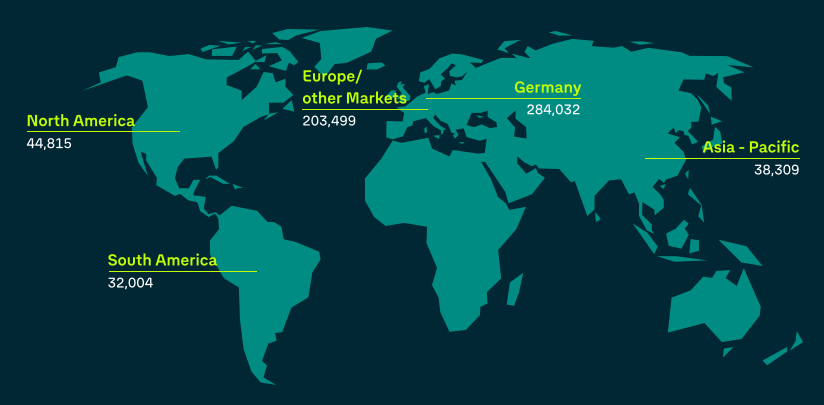
|
|
GERMANY |
|
EUROPE/OTHER MARKETS* |
|
NORTH AMERICA |
|
SOUTH AMERICA |
|
ASIA-PACIFIC |
||||||||||||||
|---|---|---|---|---|---|---|---|---|---|---|---|---|---|---|---|---|---|---|---|---|---|---|---|---|
|
|
2025 |
|
2024 |
|
2025 |
|
2024 |
|
2025 |
|
2024 |
|
2025 |
|
2024 |
|
2025 |
|
2024 |
||||
|
|
|
|
|
|
|
|
|
|
|
|
|
|
|
|
|
|
|
|
|
||||
Employees |
|
284,032 |
|
293,338 |
|
203,499 |
|
203,424 |
|
44,815 |
|
47,072 |
|
32,004 |
|
31,740 |
|
38,309 |
|
38,508 |
||||
Employees with a permanent employment contract |
|
280,398 |
|
285,935 |
|
195,005 |
|
193,767 |
|
44,091 |
|
45,791 |
|
30,474 |
|
30,019 |
|
36,434 |
|
35,625 |
||||
Employees with a temporary employment contract |
|
3,634 |
|
7,403 |
|
8,494 |
|
9,657 |
|
724 |
|
1,281 |
|
1,530 |
|
1,721 |
|
1,875 |
|
2,883 |
||||
Full-time employees |
|
244,582 |
|
– |
|
197,523 |
|
– |
|
44,749 |
|
– |
|
31,864 |
|
– |
|
38,239 |
|
– |
||||
Part-time employees |
|
39,450 |
|
– |
|
5,976 |
|
– |
|
66 |
|
– |
|
140 |
|
– |
|
70 |
|
– |
||||
|
||||||||||||||||||||||||
Metrics related to non-employees
The total number (headcount) of non-employees working in the Company was 20,430 (25,162) as of December 31, 2025.
Metrics related to collective bargaining coverage and social dialogue
A total of 91.6 (92.0)% of Volkswagen Group employees are covered by collective bargaining agreements. In accordance with the ESRS, the figure for the current reporting year only relates to employees in countries in the European Economic Area (EEA). A collective bargaining agreement means a written agreement between trade unions – or, in their absence, duly elected workers’ representatives – and employers, which, among other things, governs working hours and wages as core components. A total of 98.9 (99.1)% of the Volkswagen Group’s employees in the EEA are covered by workers’ representatives. There are agreements with employees regarding representation by a European Works Council (EWC, EWC SE, EWC SEC).
|
|
Collective bargaining coverage |
|
Social dialogue |
|---|---|---|---|---|
Coverage rate (in %) |
|
Employees (EEA only) |
|
Workplace representation (EEA only) |
|
|
|
|
|
0 – 19 |
|
Bulgaria, Estonia, Ireland, Croatia, Latvia, Lithuania |
|
Ireland |
20 – 39 |
|
Greece, Luxembourg |
|
|
40 – 59 |
|
Denmark |
|
|
60 – 79 |
|
Poland, Romania |
|
Greece, Luxembourg |
80 – 100 |
|
Austria, Belgium, Czech Republic, Finland, France, Germany, Hungary, Italy, Netherlands, Norway, Portugal, Slovakia, Slovenia, Spain, Sweden |
|
Austria, Belgium, Bulgaria, Croatia, Czech Republic, Denmark, Estonia, Finland, France, Germany, Hungary, Italy, Latvia, Lithuania, Netherlands, Norway, Poland, Portugal, Romania, Slovakia, Slovenia, Spain, Sweden |
The figures correspond to the previous year; for Slovenia only there has been a change in collective bargaining coverage to the next higher category, 80 – 100%.
Metrics related to adequate wages
Within the EEA, the legally required minimum wage in the respective country is used as a benchmark for adequate wages in accordance with ESRS requirements. In countries without a regulated minimum wage, the legal minimum wage of a neighboring country with a similar socio-economic status is applied as a benchmark. As there is no uniform methodology for setting a minimum wage outside the EEA, the benchmarks from the Wage Indicator Foundation’s Living Wage database, which is cited in the requirements of the ESRS as a possible data source for countries outside the EEA, are used as the first instance. The benchmarks for all the countries outside the EEA where the Volkswagen Group has employees are obtained from this database. The underlying benchmarks were last updated for this report in October 2025.
The salary components used to calculate the lowest gross hourly wages in each case are specified in accordance with the requirements of the ESRS and uniformly defined throughout the Group. Only the base salary and guaranteed additional payments are included in the calculation. However, in many cases, there are other variable remuneration components in the Volkswagen Group that are not included in this calculation. From the Company’s perspective, these other remuneration components may form a significant proportion of wages that are excluded from calculations conducted in line with ESRS guidelines.
For the metric, the lowest gross hourly wages for each company are compared to the respective country’s benchmark. These comparisons were used as a basis to ascertain that virtually all of the Group’s employees were paid a wage above the respective benchmarks. In the previous year, the benchmarks were not achieved for all employees (proportion/number of employees) in the following countries: Singapore (12.2%/86), Morocco (4.5%/6), Albania (2.5%/2), Sweden (0.2%/49), Austria (0.1%/5), Mexico (0.1%/10), Brazil (0.0%/1) and Germany (0.0%/2).
In countries where the aforementioned benchmarks were not achieved in the reporting year, the local minimum wage or the collectively agreed minimum wage was examined on a case-by-case basis. If the case-by-case assessment determined compliance with the local minimum wage or the collectively agreed minimum wage, these employees are considered to receive adequate wages. Because of the additional case-by-case assessments, the prior-year figures are not comparable with the current figures.
For the 2025 reporting year, these case-by-case assessments showed that nearly all Volkswagen Group employees receive an adequate wage in accordance with the ESRS definition. An exception in accordance with the ESRS (proportion/number of employees) is Austria (0.1%/4), where no statutory or collectively agreed regulations for the employees in question exist and the minimum wage is marginally below its socio-economic neighbor Germany. Another exception relates to employees in Singapore (23.8%/178), who nevertheless receive other significant remuneration components, for example in the form of sales commissions, depending on the job they perform. These remuneration components are not considered in the ESRS requirements.
Metrics related to training
The average number of training hours per employee in accordance with the requirements of the ESRS was 21.6 (18.9) hours in the reporting year 2025. The calculation is based on the employee data from December of the previous year to December of the reporting year. Time-dependent and time-independent in-person and online training with or without a trainer (self-guided) all count as training. Where time-independent learning is concerned, it is primarily the specific amount of time spent in training that is recorded. If this is not technically possible, the stored target value per time-independent training measure is evaluated.
Occupational health and safety
This section addresses the sustainability topics of occupational health and safety in accordance with ESRS S1.
Actions related to occupational health and safety
A Group policy requires the senior managers of each company to make adequate financial, human and material resources available to fulfill the tasks in the focus area of occupational health and safety and ensures sufficient qualification and training of skilled staff. Volkswagen AG’s Group Occupational Health and Safety organizational unit is tasked with standard-setting, information provision, communication and monitoring.
Mandatory establishment and ongoing improvement of an occupational health and safety management system
The Group has issued a Group-wide policy requiring the companies to introduce and obtain certification for an ISO 45001 management system at all production sites with more than 1,000 employees, which must be implemented to promote occupational health and safety. Each company is responsible for obtaining certification. As part of the Group audit program, internal audits are conducted on the basis of ISO 45001 requirements and the Group policy on occupational health and safety. 2 (4) Group audits were conducted in 2025. Completion of the required ISO 45001 certifications by the end of 2026 is planned.
Risk analysis related to occupational health and safety at company level and actions to minimize work-related risks
To evaluate the Group companies’ current performance in occupational health and safety, in the reporting year the Volkswagen Group conducted a risk analysis at the level of the companies. The scope of the 2025 risk analysis was defined using of risk-based criteria, incorporating the previous year’s results. To supplement the questionnaire-based self-assessments submitted by Group companies in previous years, Group Occupational Health and Safety also conducted remote testing, on-site inspections and audits in order to detect and rule out specific risks. As a result, it was possible to identify improvement potential and introduce actions to reduce sustainability-related risks. In addition, regular dialogue took place as part of communication with the companies. The identified good practices offer opportunities for improvement across Group companies.
The Volkswagen Group conducts systematic analyses of the status quo of occupational health and safety in the Group each year. From these analyses, it derives measures to minimize work-related risks where a need for action is identified. These cover all the Volkswagen Group’s employees and are made accessible to them through targeted communication.
Through the actions described, the Volkswagen Group promotes occupational health and safety and thereby contributes to the actual and potential positive impacts on employee well-being in relation to occupational health and safety.
The effectiveness of the risk analysis and the actions derived from it to minimize work-related risks is tracked using spot checks on the companies – even those without identified risk indicators.
Targets related to occupational health and safety
The Safety First strategy and the Group policy on occupational health and safety require all Volkswagen Group production sites to comply with the standards of ISO 45001 occupational health and safety management systems. All production sites (including the Chinese joint ventures) with more than 1,000 employees are due to be certified in accordance with ISO 45001 by the end of 2026.
The target was intentionally developed in line with the ILO recommendation on the certification of occupational health and safety management systems and the sustainability reporting standards prevailing at that time.
At the same time, the development process took into account the particular local characteristics of the location and industry by restricting the target to production sites with more than 1,000 employees. Specific capital market requirements that were brought to the Volkswagen Group’s attention through ESG ratings were also integrated into the reporting by means of additional reporting on the coverage of the certified management systems.
Collecting metrics is a core element for assessing the effectiveness of actions. To monitor the target, an analysis is conducted each year to determine how many of the Group-wide production sites with more than 1,000 employees are ISO 45001 certified and how high the associated coverage of employees is. At the end of 2025, a total of 87 (80) Group production sites (including the Chinese joint ventures) were certified in accordance with ISO 45001. This corresponds to coverage of 87 (74)% of employees at the Group production sites (including the Chinese joint ventures) with more than 1,000 employees. The metric is calculated by dividing the number of employees at certified production sites with more than 1,000 employees by the total number of employees at production sites with more than 1,000 employees.
Since the target was set, no changes have been made to the target itself or the underlying methodology for the target. Targeted and ongoing communication with affected companies via steering committees has indicated potential obstacles to full achievement of the target. This can be attributed to factors including adjustments to the targets at the individual companies.
In addition to the number of ISO 45001-certified production sites and their level of coverage of employees, the Volkswagen Group also uses the lost time injury frequency rate (LTIFR) for employees as an essential metric for reporting. This is recorded as an accident frequency index and provides information on the number of accidents at work as a proportion of the total hours worked. It is calculated as the number of accidents at work reported with at least one day lost multiplied by 1 million divided by the total number of hours worked. In 2025, the accident frequency at the Volkswagen Group was 6.2 (6.4).
The Volkswagen Group attaches great importance to reducing the LTIFR to below 1 for all brands and companies by 2040. This target was set as part of the Group sustainability strategy regenerate+ and forms a key performance indicator within this strategy, whilst the accident frequency target was developed by taking into account the ESG rating requirements. The documentation requirement for work-related accidents that is needed in order to determine the metric is set out in the occupational health and safety Group policy.
The target referred to above also addresses ILO recommendations on occupational health and safety and the Global Reporting Initiative (GRI) sustainability reporting standards used at the time of development. The targets of ISO 45001 certification and the number of work-related accidents are not measured against either a specific baseline or a specific base year, as the Volkswagen Group measures itself against the aim of having as few work-related accidents as possible each year, and none of them fatal.
The Group uses Group regulations to provide Group-wide information in the event of fatal accidents involving employees, non-employees or other workers who work at the Volkswagen Group’s sites. On this basis, actions can be taken to prevent similar accidents across all sites in future. Accidents are analyzed locally and appropriate actions are introduced to prevent further accidents.
Since the target was set, no changes have been made to the targets or their underlying methodology.
Employees and non-employees were not involved in the process of defining the targets.
Metrics related to occupational health and safety
Based on legal requirements and/or recognized standards or guidelines from a health and safety management system of the Company, 82 (83)% of employees are covered. A total of 55 (46)% of employees are covered by such a health and safety management system that has been audited or certified by an external party.
There were 4 (4) deaths as a result of work-related accidents or ill health during the reporting year. Across the Group, the process for reporting deaths resulting from work-related accidents corresponds to the process for reporting fatal accidents and major incidents set out in the Volkswagen Group’s Occupational Health and Safety Policy. The process for reporting deaths resulting from work-related ill health is based on the respective national regulations. One of these deaths related to a Volkswagen Group employee. One death related to a non-employee. Two deaths related to other workers, such as value chain workers at Volkswagen Group sites.
In the reporting year, employees experienced 9,917 (10,819) reportable work-related accidents resulting in 10.8 (11.7) work-related accidents per one million completed working hours (TRIR – Total Recordable Injury Rate) in accordance with ESRS S1-14.
Equal treatment and equal opportunities
This section deals with the sustainability matters of diversity, including work-life balance, a corporate culture free from discrimination, violence and harassment, an inclusive working environment, fair development opportunities, and discrimination-free remuneration, including in terms of gender, in accordance with ESRS S1.
Actions related to equal treatment and equal opportunities
The organizational units of the Volkswagen Group responsible for implementing actions relating to the focus area of equal treatment and equal opportunities are Group Diversity and Advancement of Women, the Volkswagen Group Academy and Volkswagen AG’s Group HR Management. These units use human and financial resources on an ongoing basis to positively influence material impacts for employees and help achieve set targets.
The structure of the Volkswagen Group’s workforce varies around the world. As such, specific actions are required to ensure equal treatment and equal opportunities. Responsibility for this lies with the brands and companies, and is based on the needs of the workforce in question.
Linking Group Board of Management and management remuneration to the diversity index
Within the scope of the ESG factor, the short-term variable remuneration of the Group Board of Management (annual bonus) is linked to factors including the diversity index, which comprises of the proportion of women in management and international representation in top management. Both components of the diversity index are underpinned by a strategic target. This creates a direct incentive at Group Board of Management level. The diversity index’s remuneration relevance is described in more detail in the “General Information” chapter. In addition, an ESG factor was included in the short-term variable remuneration (annual bonus) for management below the Group Board of Management in 2023. Within the scope of this ESG factor, the proportion of women in management relevant to the index was embedded in the short-term variable remuneration.
By creating these incentives at both Board of Management and management level, the Company contributes to an actual positive impact relating to workforce diversity, fair development prospects and non-discriminatory remuneration.
The effectiveness of this action but also the promotion of diversity itself are tracked through the trajectory of the diversity index. More information can be found in the section “Targets related to equal treatment and equal opportunities”.
Actions to create an inclusive working environment and equal treatment of employees
With its Group-wide HR Compliance Group policy, the Group provides the companies with action areas related to the promotion of workforce diversity, the promotion of a culture free from discrimination, violence and harassment, the fostering of an inclusive working environment, fair development prospects and discrimination-free remuneration. These action areas encompass the integration of these topics into corporate values, processes and communication and the appointment of a contact person. From a certain size, companies are required to establish the role of a diversity expert within the scope of local legislation. Actions to raise awareness of these topics amongst employees and managers must be implemented within the scope of the aforementioned action areas. The scope and depth of the actions are tailored to the size of the company.
The actions thus contribute to an actual positive impact for employees in the form of equal treatment and equal opportunities for all employees. This is the result of diversity in the workforce, a culture free from discrimination, violence and harassment, an inclusive working environment, fair development opportunities and discrimination-free remuneration. Collectively, this constitutes one continuous action. The effectiveness of this action is not tracked centrally but is instead generally monitored at local or company level due to the diversity of the actions involved.
Anti-discrimination rules
A new Group anti-discrimination policy was drawn up and finalized in 2023. In 2024, this policy was shared with the companies. The aim here was to close regulatory gaps regarding the avoidance of discrimination in the hiring, remuneration and promotion process.
From 2024 onwards, an annual reminder has been sent to those Group companies that have failed to implement or have insufficiently implemented rules on avoiding discrimination.
Group companies are not obligated to introduce this rule; however, introduction of the rule is recommended by the Group. In the reporting year 2025, a further 29 companies introduced an anti-discrimination rule.
The aim of the anti-discrimination rule is to remedy the actual negative impact generated by isolated and individual cases of unfair treatment and inequality of opportunities. HR Compliance also revised the specific Group policy with regard to the Volkswagen Group’s potential negative impacts in relation to inequality of treatment of employees. For the recruitment process, it was amended to stipulate that decisions on recruitment will be made exclusively on the basis of the applicant’s qualifications.
The effectiveness of this action is not tracked centrally but is instead generally monitored at local or company level due to differences in the way the action is implemented.
Preparation of materials for managers
Across the Group, management and managers are continuously offered the opportunity to qualify themselves regarding their impartiality and the safeguarding of equal opportunities. Volkswagen AG encourages all managers to discuss the topic of unconscious bias in order to foster an unbiased workplace and establish processes that support equal opportunities. The training on offer is designed to enable managers to analyze their own department-specific processes, and to derive and implement suitable actions to safeguard equal opportunities and reduce prejudices and stereotypes within their department. In addition to this, supporting materials are compiled centrally and made available to the brands and companies. The Group suggests integrating the content and methods described in these materials into existing training and processes with adjustments to suit local conditions. The aforementioned goal of ensuring an unbiased workplace and processes that support equal opportunities remains valid throughout this process.
This contributes to an actual positive impact on employees resulting from diversity in the workforce, a culture free from discrimination, violence and harassment, an inclusive working environment, fair development opportunities and discrimination-free remuneration. The effectiveness of this action is not tracked centrally but is instead generally monitored at local or company level due to the diversity of the actions involved.
Collecting and publishing statistics on employee misconduct and disciplinary actions
Each year, the Volkswagen Group collects and internally publishes statistics on employee misconduct and disciplinary actions taken. The regular reporting on the statistics on disciplinary actions is used firstly to create transparency and secondly to enable countermeasures to be taken as soon as possible if there are any anomalies. The internal publishing of disciplinary statistics also contributes to transparency and raised awareness, and encourages employees to directly address or report misconduct.
In 2025, 30 (32) Volkswagen Group employees were dismissed due to breaches related to discrimination, bullying, or stalking.
Publishing the statistics on employee misconduct and disciplinary actions taken in relation to discrimination, bullying, or stalking represents an action that has been taken to promote awareness of the consequences of unequal treatment and thus prevent discrimination and actual negative impacts on employees from isolated incidents of unequal treatment.
To track the effectiveness of this action, the responsible department within the Group continuously monitors the development in the number of cases and takes action where necessary.
Targets related to equal treatment and equal opportunities
The topics of equal treatment, equal opportunities and diversity are enshrined in the HR Compliance Group policy. The particular importance of this action area is further underscored in the Volkswagen Group by the introduction of the diversity index as a strategic metric of the Group People Strategy, the Group strategy, and the Group sustainability strategy regenerate+. This index is also of relevance for the remuneration of the Group Board of Management. It is the Volkswagen Group’s aim to increase diversity in the Company (further details can be found in the section “Linking Group Board of Management and management remuneration to the diversity index”). This includes setting targets for the percentage of women in management and for the level of international representation in top management. Both of these figures have been combined in the diversity index since 2017. The index is gathered for the employees of the entire Volkswagen Group, but excludes employees in the withdrawal phase of their time asset bonds (time asset bond: time credit from deferred compensation), apprentices and employees in the passive phase of partial retirement. In addition, and as a deviation from the requirements of the ESRS, the Chinese joint ventures are included in this strategic KPI. The index is used to measure and steer implementation of the targets.
Due to the regulatory framework in the United States, employees of Volkswagen AG’s US subsidiaries and their non-US subsidiaries, as well as other employees in the United States, are excluded from the measurement of the proportion of women using the diversity index. Employees of Volkswagen AG’s US subsidiaries and other employees in the United States are also excluded from the determination of the internationalization of top management. The targets for the sub-KPIs have been reduced by 0.4 percentage points each, resulting in a target index value of 154 for the reporting year (157 before adjustment). The prior-year figures (actual and target) reported in the following have not been retrospectively adapted to this approach.
The proportion of women in management, comprising management, senior management and top management (including the Group Board of Management and brand boards of management), amounted to 20.3 (19.9)% in 2025. The adjusted intermediate target of 19.8 (19.0)% for this year was thus achieved. The Volkswagen Group wants to increase the proportion of women in management to 23.2% by 2028. This represents an increase of 11.1 percentage points compared with our baseline of 12.1% from 2016. The adjusted target for the degree of internationalization in top management (the most senior of the three tiers of management) in 2025 was set to at least 24.6 (24.1)% and, at a rate of 28.6 (29.1)%, was achieved in the reporting year now ended. The Volkswagen Group wants to increase international representation in management to 28.1% by 2028. For the intermediate target in 2026, the Volkswagen Group plans to increase the proportion of women in management to 21.3% and the degree of internationalization in top management to 27.5%. The figures for the proportion of women in management and the internationalization of top management are incorporated with equal weighting into the diversity index, which was set to 100 for 2016. For 2025 it was planned to increase this value to 154 (149). This target value was exceeded with a score of 168 (168).
The diversity index was established in 2017 and was used continuously as a KPI in the applicable Group strategy and Group people strategy. It was adjusted in the reporting year as described above. The index was also added to the regenerate+ strategy as a top KPI in 2024. The Supervisory Board has decided to define the diversity index as the performance criterion for the Social subtarget within the framework of the ESG factor for the variable remuneration (annual bonus) of the members of the Board of Management. Employee representatives participated in said decision, ensuring that the interests of the workforce were considered.
The Volkswagen Group generally develops targets where there is a connection to its strategies. No measurable outcome-oriented targets within the meaning of the requirements of the ESRS have been defined for a culture free from discrimination, violence and harassment or an inclusive working environment. The effectiveness of the management policies and actions on the impacts identified in the materiality assessment performed in the reporting year is not monitored.
Metrics on diversity
The following tables show the gender distribution of employees by number and percentage at management level and the distribution of employees by age group. In contrast to the percentage of women included in the diversity index, the gender distribution at this point only encompasses top management (including the Group and brand Boards of Management) and not senior management or management.
|
|
2025 |
|
2024 |
||||
|---|---|---|---|---|---|---|---|---|
Gender |
|
Employees |
|
Percentage breakdown |
|
Employees |
|
Percentage breakdown |
|
|
|
|
|
|
|
|
|
Male |
|
385 |
|
86.7 |
|
421 |
|
87.7 |
Female |
|
59 |
|
13.3 |
|
59 |
|
12.3 |
Other |
|
– |
|
– |
|
– |
|
– |
Age group (breakdown in percent) |
|
2025 |
|
2024 |
|---|---|---|---|---|
|
|
|
|
|
Under 30 years of age |
|
15.2 |
|
16.1 |
30 – 50 years of age |
|
56.9 |
|
56.9 |
More than 50 years of age |
|
27.9 |
|
27.0 |
Metrics related to pay gaps and annual total gross remuneration
The gender pay gap refers to the difference in the average earnings between women and men. In this report, the unadjusted gender pay gap is presented. It represents the percentage difference in the average gross hourly wages of men and women, without accounting for structural differences. In the reporting year, the difference at the Volkswagen Group was 9 (13)%. This value is 4 percentage points below the previous year. Changes in the gender pay gap cannot be clearly attributed to a single factor. The metric is affected, among other things, by changing workforce structures and overlapping organizational effects. The impact of the individual factors therefore cannot be measured in isolation, and the reason for changes can rarely be clearly explained.
The unadjusted gender pay gap is calculated by determining the difference between the average earnings of male and female employees. This difference is then divided by the average hourly earnings of men and multiplied by 100 to produce the gap as a percentage.
The average hourly earnings per gender are calculated on the basis of employees’ annual total gross remuneration. This includes, among other things, remuneration for work performed in the reporting year (remuneration of working hours including overtime, shift allowances) and the remuneration of lost hours/absence, i.e. vacation pay, public holidays, illness and other absences. The total gross remuneration for each gender is divided by annual working hours, including overtime registered in the time recording system.
Unlike the unadjusted gender pay gap, the adjusted gender pay gap takes account of factors such as qualifications, professional experience, job system or position. It therefore shows the remaining pay gap between men and women with comparable characteristics. On the basis of available economic data, this figure is usually significantly lower than the unadjusted figure.
The ratio of the annual total gross remuneration of the highest paid individual to the median annual total gross remuneration for all employees (excluding the highest-paid individual) was around 162 (195). This value is 17% below the previous year. In fiscal year 2025, the remuneration of the highest paid individual was below the annual total gross remuneration for the previous year. An approximation method based on the median remuneration, the companies’ average pay level, and the distribution of pay within the companies was used for calculating the median. For the calculation of employees’ average pay levels at the companies, the same definition of annual total gross remuneration was used as for calculating the pay gap between women and men.
Other work-related rights
This section addresses the sustainability topics of child labor and forced labor in accordance with ESRS S1.
Actions related to other work-related rights
The organizational units of the Volkswagen Group responsible for implementing actions relating to the focus area of other work-related rights are Group HR Compliance at Volkswagen AG and the respective operational HR departments at company level. These units use human and financial resources on an ongoing basis to positively influence material impacts for employees and help achieve set targets.
Minimum standards to prevent violations of basic human rights in the recruitment process
To better implement social standards and safeguard human rights, various basic actions were introduced and previously initiated actions were expanded to focus on protecting human rights. This means that, as part of Volkswagen’s recruitment process for external hires, identity and age checks are carried out for all employees who enter into a temporary or permanent training or employment contract with a Volkswagen Group company. In addition, the local minimum age limit for employment is checked. Furthermore, when the contract is concluded, the voluntary declaration of intent is documented and a signed job offer letter confirms the agreement.
In the event of deviations from the standard recruitment process, documentation is prepared and decisions are made jointly, following the principle of multiple-party verification. Deviations from the minimum age limit are not permitted in order to ensure that child labor is avoided. The action applies across the Group to the recruitment process for potential new employees and is also being implemented by employees in the HR department. The action is implemented continuously.
By implementing the actions to improve the recruitment process, the Volkswagen Group contributes to the actual and potential positive impacts on employees by promoting compliance with social and human rights standards beyond local legal standards.
The Group tracks the effectiveness of these actions by reviewing compliance annually using a risk-based approach.
Targets related to other work-related rights
The Volkswagen Group generally develops targets where there is a connection to its strategies. No measurable outcome-oriented targets within the meaning of the requirements of the ESRS are currently defined in connection with child labor and forced labor. The effectiveness of the management policies and actions related to the impacts identified in the materiality assessment, which was performed in the reporting year, is currently not monitored. In line with its corporate values, the Volkswagen Group does not tolerate any form of child or forced labor.
Metrics related to other work-related rights
|
|
2025 |
|
2024 |
||||
|---|---|---|---|---|---|---|---|---|
|
|
|
|
|
||||
Total number of serious violations identified in relation to discrimination and harassment |
|
20 |
|
22 |
||||
Total number of serious violations identified in relation to other workforce issues |
|
4 |
|
2 |
||||
Reported by National Contact Points for OECD Multinational Enterprises |
|
– |
|
– |
||||
Total fines, penalties and compensation payments (€ thousand)1 |
|
– |
|
9 |
||||
|
||||||||
|
|
2025 |
|
2024 |
||||||
|---|---|---|---|---|---|---|---|---|---|---|
|
|
|
|
|
||||||
Serious human rights violations identified in accordance with LkSG2 |
|
– |
|
– |
||||||
Total fines, penalties and compensation for payments (€ thousand)1 |
|
– |
|
– |
||||||
|
||||||||||